Josh O’Connor: “For Ages I Was Thinking, Am I Getting Complacent?”
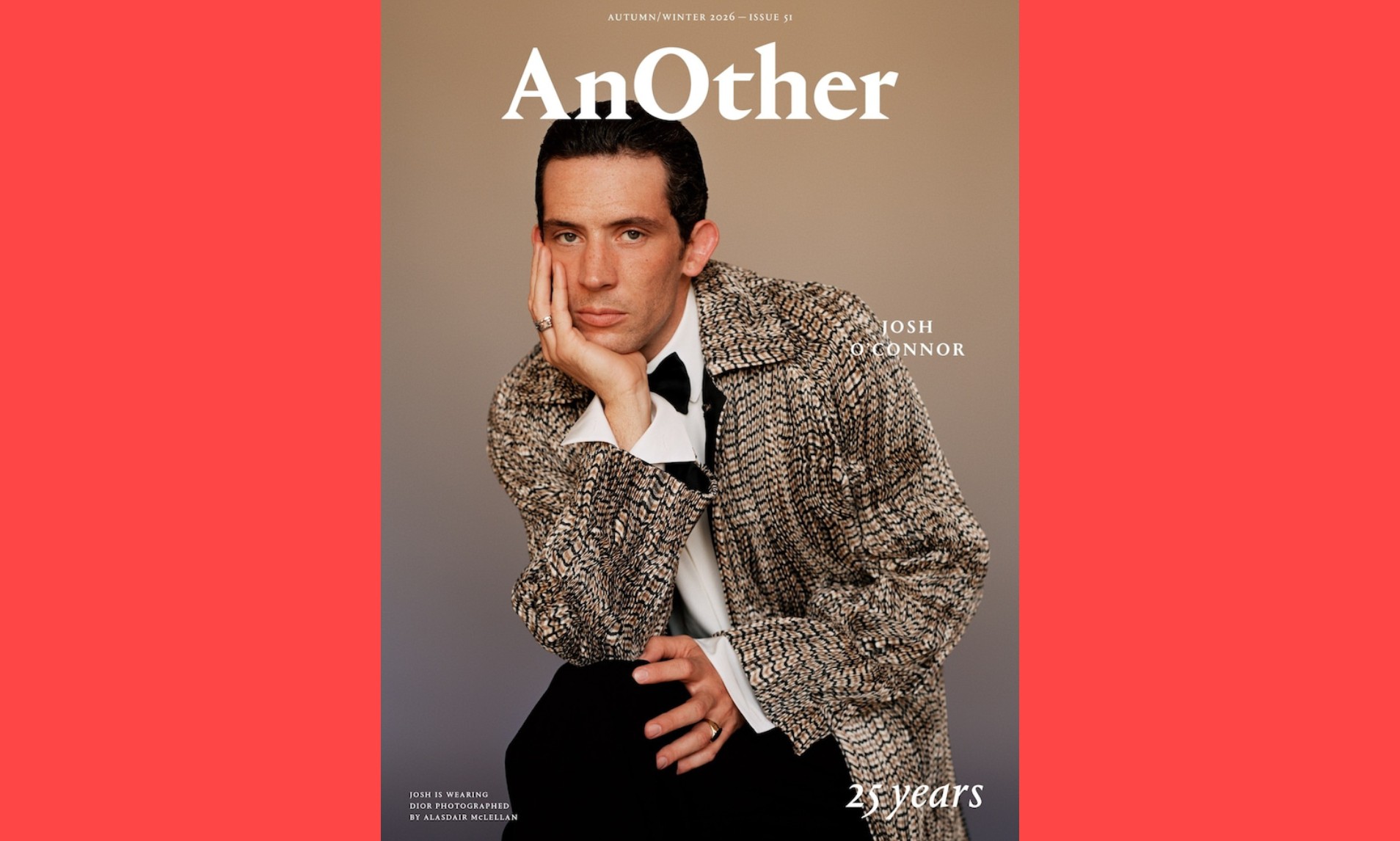
Off the back of filming Alice Rohrwacher’s forthcoming movie Three Incestuous Sisters, Josh O’Connor and co-star Saoirse Ronan talk about the isolation and insecurities of their profession and “the bizarre thing of coming back home”
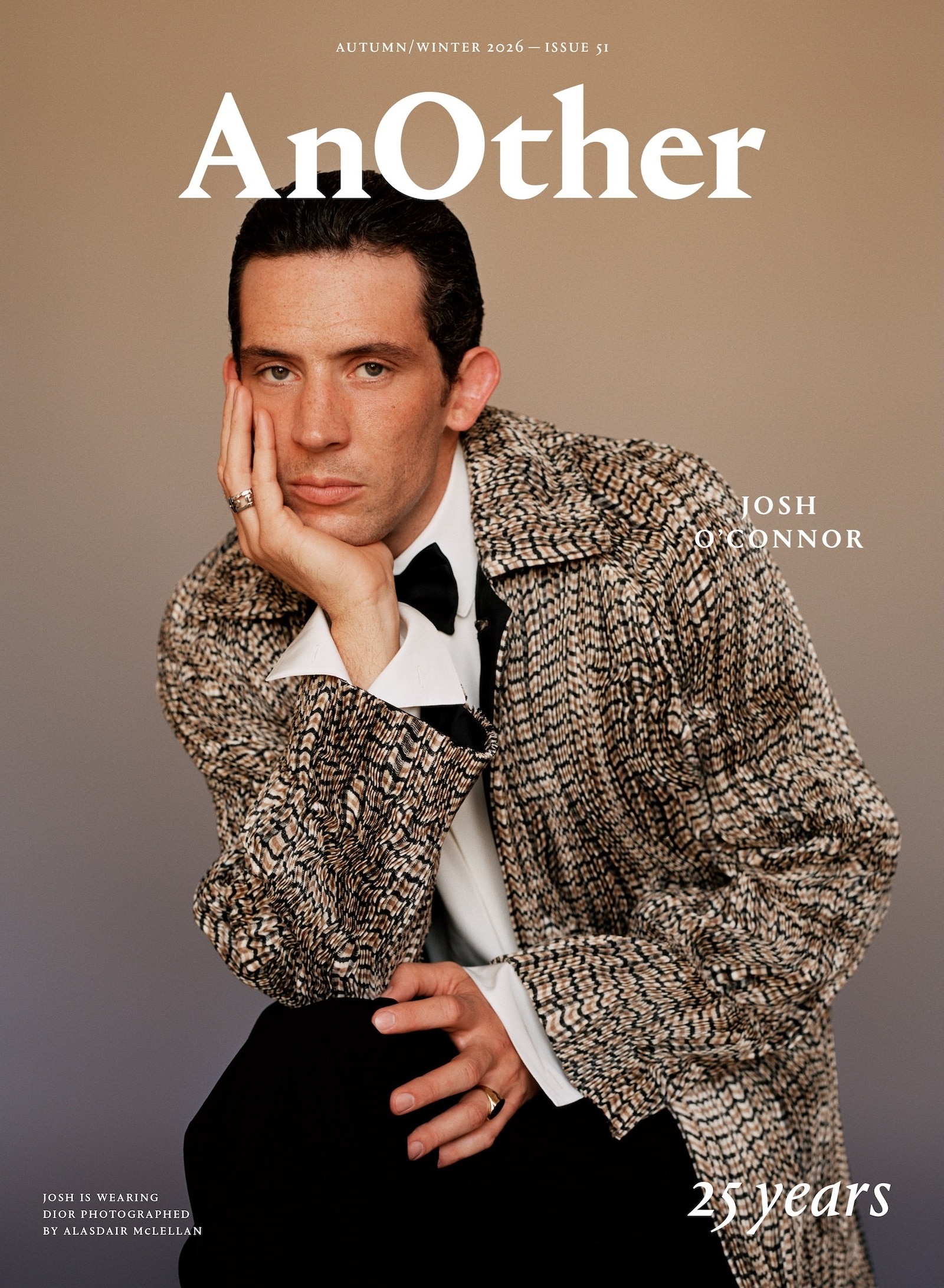
This story is taken from the Autumn/Winter 2026 issue of AnOther Magazine:
Across the past decade, the British actor Josh O’Connor has proved himself a renaissance man. His filmography, spanning work with genre-defying auteurs including Luca Guadagnino and Kelly Reichardt and lead roles in blockbusters such as Steven Spielberg’s Disclosure Day and the Knives Out franchise, has long eclipsed his Netflix break in The Crown.
The list of his admiring co-stars is long, and so, straight from wrapping Alice Rohrwacher’s forthcoming film Three Incestuous Sisters together – which looks to be an entirely unpredictable rendition of Audrey Niffenegger’s novel of the same name – Saoirse Ronan agreed to interview him for this issue. When they spoke, O’Connor was gearing up for the release of his next film, Joel Coen’s gothic mystery Jack of Spades, as well as a stint on stage this autumn at the Almeida Theatre, London, in Golden Boy, directed by Sam Yates. After months of swimming off the rocks of the Italian island of Stromboli, to the steady rumble of its famous volcano, and with Rohrwacher’s magical filmmaking still fresh in their minds, the two actors attempted to find a sense of themselves again, here.
Saoirse Ronan I am very envious that you got to do this amazing film, Jack of Spades, in Scotland. Where did you shoot?
Josh O’Connor Well, Saoirse, it’s weird, isn’t it? I feel like Scotland is very much your territory. It’s your spiritual home.
SR Very much so.
JOC I know you’re Irish, but you live in Scotland and you love Scotland. Also, I love Scotland. I used to go camping a lot on the west coast as a kid and still do now. And we were quite close to where I used to go camping, up by Achiltibuie, just north of Ullapool. We were in three or four different towns on the west coast looking out onto Jura. Anyway, Joel [Coen] is great. He’s hilarious. I feel like half our job is understanding how to understand our director and what’s going on.
“Let’s face it, the reason we all became actors is because when we were kids we needed to be seen or were trying to show ourselves in some way” – Josh O’Connor
SR How to make them happy.
JOC Right, and for Joel, it was so difficult to know when he was happy because when he was not entirely happy with something he’d go, “Um OK,” which meant, that’s OK. The height of happiness for Joel is, “OK!” So really, it’s a fine line. I realised I was not going to be plied with praise the whole way through.
SR How was that for you as an actor? How do you navigate that when you’re not getting very clear feedback, whether it’s praise or criticism?
JOC He would give great notes. He’s just not an overly effusive person. Let’s face it, the reason we all became actors – I’m in a therapy zone now – is because when we were kids we needed to be seen or were trying to show ourselves in some way. And even if that’s just a hunger for praise, or a hunger for your ego to be stroked, deep down there is an element of that. And, just as a human being, it’s nice to know that you’re doing a good job. There is nothing better than the feeling you get when you’ve done a take and you know there’s a feeling in the room, that that was the one. There really is no better feeling.
SR And when that’s coming from a director who doesn’t give a ton of compliments or isn’t super hyperbolic, you know that when they give you a glowing review – or their version of that – it’s felt and it’s meant.
JOC If the most effusive you get from Joel is, “OK!”, it’s scalable. By the end you know what you are fighting for. When you get it, it’s the most incredible feeling.
The experience we’ve just had with Alice [Rohrwacher] on Three Incestuous Sisters, we had this period of rehearsals and there’s only so much you can do. It’s not like a play, where you rehearse for an extended period of time. You are essentially a group of people discovering, navigating, trying to read a script and find the depths of it. Then you’re staging it – you are in performance and you learn stuff during the performance.
[For Three Incestuous Sisters] we were rehearsing for a few weeks and then you turn up on set and it was not only completely different, but an entirely different scene sometimes. For those first two weeks, there is a sense of trying to understand what kind of version of a performance the director wants. Joel is someone who embraces the theatrical, in a way.
SR Did you have a lot of rehearsals on Jack of Spades?
JOC We had a few, but the truth is the audition process was so lengthy …
SR I know.
JOC By the time they offered me the part, I felt like I’d given ten performances already and rehearsed it. Weirdly, although stressful at the time, I loved it. It was incredible. I think the reason it went on for so long is because Joel genuinely didn’t know the answer. It was almost like a rehearsal process.
SR I’m sure you have to audition far less now, but have you found – because I know I do sometimes, even though I’m not wishing to go back into an audition room every day of the week to get a job – that there’s a gratification and a willingness to really work hard when you’ve had to audition for something and prove yourself? In your introduction to a project, you are constantly being reminded that they could just get somebody else, which is what the audition gives you.
JOC One hundred per cent. There are a couple of elements to this – one is that the grass is always greener. If you’d asked 21-year-old Josh coming out of drama school – who was doing three auditions a week and not getting any roles and working pub jobs and restaurant jobs and call-centre jobs at the same time, just to pay my rent – “Would you rather not audition and just get offered a part?”, obviously I would have been like, yes, my life would be so much better.
But you’re right. If I’m casting a film and I’m thinking, Saoirse, because I’ve seen your work and I know you’d be amazing for this part, there might be a case of, OK, I’m thinking Saoirse, but I’m also thinking Emma Stone and Jennifer Lawrence, so let’s get those three to audition. My argument would be do that. I think there’s a lot of politics involved, and agents don’t like it because they think, how dare you ask Saoirse Ronan to audition? But if you don’t audition, there is perhaps still a doubt in everyone’s mind – particularly our own, because we’re full of insecurities and don’t really know if we can do a part.
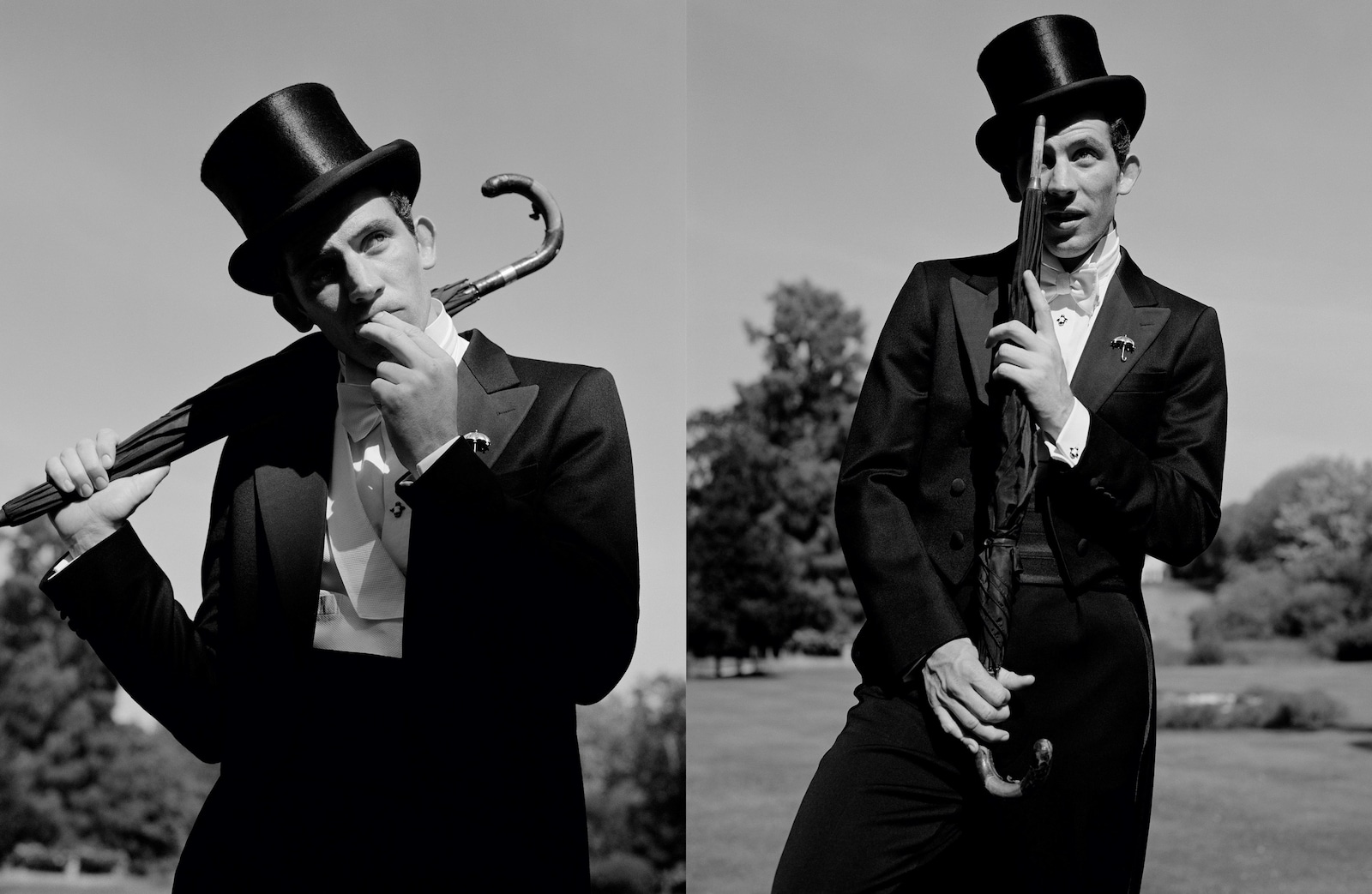
And cummerbund by FAVOURBROOK. Photography by Alasdair McLellan. Styling by Alister Mackie
SR What I’ve always found really refreshing with the Coens and with Joel and with Fran [McDormand], because we’ve all gone in and auditioned for them, is that they’re very considered in their decision-making. They have their pick of Hollywood – everyone is dying to work with them. [For Jack of Spades] they’ve cast Patsy [Ferran], who’s one of the greatest actors that we have living right now – Hollywood doesn’t necessarily know who she is, nor will anyone who doesn’t go to the theatre often. They’ll have seen everyone for that lead role and they found her and knew in their heart that she was the right person for the role, that you were the right person for your role. Lesley [Manville], of course, is always the right person for everyone.
JOC I find decision-making the hardest part of my job. We’ve talked about it a lot recently. Most scripts I read, if I’m totally honest, I think are miracles. Someone’s written this script – it’s a fully formed story and there’s a fully formed character, and I think that’s a miracle. But I don’t know which one’s going to be the one that will click for me. Until you actually do it and experience it, you haven’t a clue.
SR Also, the experience you have on set doesn’t necessarily mirror what the end product is going to be. I think most actors will tell you, most crew will tell you, that the films that they have the toughest time on, for whatever reason, end up being the ones that are the biggest success. And the ones that you meet your partner on, or you meet your best friend on, they’re usually a pile of shit. But you’ve got something out of them, and I think you start to learn that what’s deemed a success for an individual can vary.
That was one of the things I took away from our film, Three Incestuous Sisters – there are so many aspects to making it that I loved, but more than anything, I loved watching Alice and Hélène, her DP, create and think up new ideas that I’d never seen put on film before. And they have such a harmonious relationship, they’re constantly challenging one another, creatively and otherwise. As someone who wants to make my own stuff, being in the ring with them has been so inspiring.
“Every single day you finish work and you go home alone. It’s a very isolating thing” – Josh O’Connor
JOC You’re right. Those two are complete miracle workers and the way they work is fascinating to me – at times deeply frustrating, but the majority of the time it’s as if they have never read any books on how to make a film. Thank God. Their question is always, what else? What else?
For ages I was thinking, am I getting complacent? Am I losing interest in this career? Have I lost my passion or drive for success in some way? But I don’t think it is that. I’m realising that you’re right – often the films that are tricky and difficult and where there’s been a tension, those are the ones that are successful. The frustrating thing about that is it perpetuates this idea that there needs to be difficulty or stress or strain and intensity for something to be successful. And I often think those films are successful despite that atmosphere rather than because of it.
I care mostly about the experience. Because this job, for all of its beautiful things, does take you away from reality for a period. It’s like you switch off real life and you turn on the fantasy. That is in all aspects, not just playing a character. For the past three months we’ve lived on a volcanic island, eating and drinking together, swimming and climbing up volcanoes and having this amazing time. Now I’m confronted with the bizarre thing of coming back home. My friends have made other friends, they’re doing other things, people have moved away from my village, I have a garden and bills to pay. Life carries on. Dakota [Johnson] said something to me the other day on set [for Three Incestuous Sisters] – which I thought was very straightforward but I’d never really considered – which is that when you are away for three months, every single day you finish work and you go home alone. It’s a very isolating thing.
SR I think we’re quite aligned on what we want our work-life balance to be. We’re always striving to make sure that we’re still in touch with reality. And for me, having grown up in this environment, one of the things I became so aware of, especially when I moved out of my family home and I was renting my first place when I was 18, 19, is that so much is also done for you when you do a job. There’s a lot of thinking and decision-making that’s done on your behalf and it can really affect your ability to do that for yourself the rest of the time. You become infantilised a bit.
Something we’ve talked about a lot is how important it is for us to protect our home life. Because I started when I was so young – I was eight years old. I remember getting to my mid-twenties and thinking, oh my God, I’ve measured my time through films and film sets. I’m very grateful for those experiences, and it’s a huge part of who I am and who’s in my life, but I don’t want that to be everything. I think I’ve learnt a lot from my partner [Jack Lowden], he’s incredibly curious about other things. But so are you. I value that.
JOC I do too, but I think that it’s taken some time. I often think about how long you’ve been doing it for and I don’t know how you’ve managed to hold on to that side of things. Because the great release you’d get from being employed is the experience of being outside yourself, being someone else for a period of time and it was a luxury. For maybe eight months of the year, it was just Josh living in a flat-share with six other people, doing my daily things, working at a pub, whatever. And then for those few months where I was employed, I didn’t have to do that. I could be someone else. I could fully inhabit a character.
And then a shift happened, and suddenly nine months of the year – sometimes ten or eleven months in recent years – I’m playing someone else. And so, if that proportion is out, then that month that you’re Josh becomes the luxury, that becomes the treat. The other thing is, there’s a buffer. I feel like I’m in a buffer period right now – after finishing a job, I now have to readjust and be Josh. This isn’t me going, “I became my character, Paris, in Three Incestuous Sisters.” But I also did. I think there is a grief that happens. And it’s not just for the character, it’s also for the community that you’ve built, it’s for the place you’ve just lived in. There is a grief or a readjustment. And then there’s just being in your body for a minute, being in your life, and that is a luxury, but it’s also incredibly confusing. You can lose sight of who you are and what that life is.
There are also lots of very technical aspects to how you take time out. I was talking for a long time about taking one whole calendar year off. And when I say off, I mean, as if I was never an actor. I just want to make pottery, garden, for an entire calendar year. I love gardening, but for the past few years I’ve been pruning in the autumn, I’m seeding stuff in the new year. Then every summer I miss it all.
So I just kept talking about having this whole calendar year where I just don’t do that kind of work.
I might volunteer – I’m sure I’d need to do something, but something else. And this actor said to me, “Well, you need to take two years off, then.” Because let’s say next year I decide I’m not going to work, there’ll be two press tours I’ll have to do.
SR Which is much harder work than what we actually do.
JOC Much harder work. It’s more stressful, it’s more anxiety-inducing. So there’s a technical side to it too. But I think I really look up to you, and that’s why I reached out to you a few years ago. You have had the benefit of having worked from a young age – but you’ve also been nominated [for an Academy Award], how many times?
SR Four.
JOC Four times, which is ridiculous. You’ve done all that stuff, the height of press tours, award campaigning and jobs, balancing both and being a nomad and travelling around the world, speaking about films and yourself and playing a character. Also playing the character of Saoirse in the press, which isn’t really Saoirse. You’ve done all that and now you’ve been really strong and found a balance in your life. I think for a lot of people, it’s a tricky thing to do. You have to be assertive and fight for it.
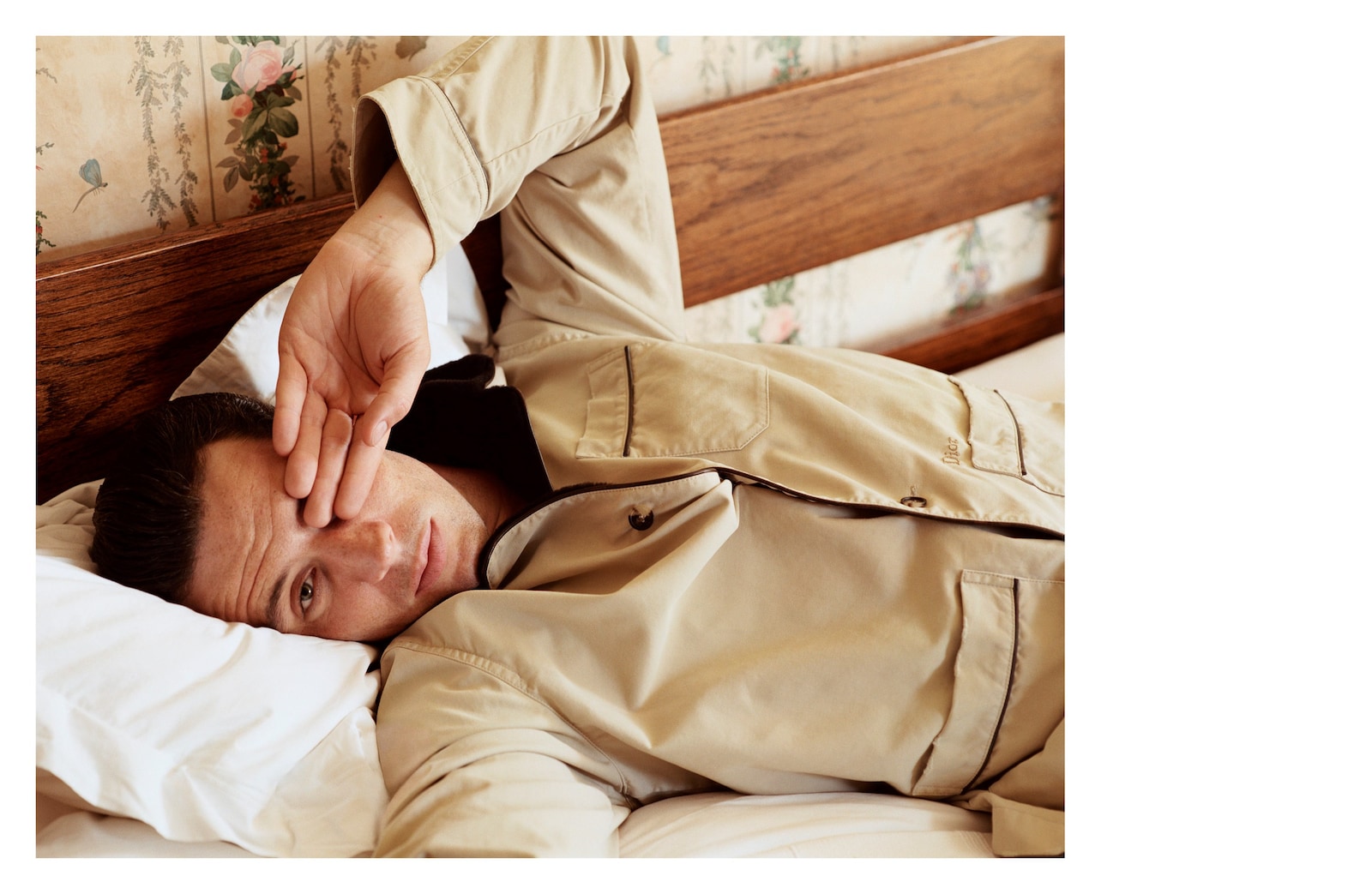
SR It’s still tricky. I’m finding that, even now with the work I have to do this year, I have to juggle in my life. I don’t think I’ve cracked it. And this is the really hard thing. I remember seeing an interview with Kate Bush years ago, because she’s been amazing at just going away for years and years. Someone said to her, “Were you afraid of being forgotten about?” Because she started when she was so young and she was the pop star. She said, “Yeah, I was.” And I am – I think we all probably are. Whether you’re an actor or a person who has a job nobody knows about, everyone has that need to be remembered. I don’t want to use the word relevant …
JOC I think you could call it legacy.
SR We know how fickle this industry can be. There’s an awareness of that, even if you don’t think in that way. You know that even if Fran McDormand went away or Lesley [Manville] went away for ten years, you’d still want them in your movie. The powers that be in our industry can be like that and the industry is changing. It’s admirable if you’re in a position to choose to take time off if you feel you need that. But the entertainment industry, music, film, fashion – it’s always moving. You basically need to surrender to it and feel the fear of potentially being forgotten about and do it anyway. Take that time off anyway. That’s very hard.
JOC It’s very honest of you to say that, very honest of Kate Bush to say that, because it probably is what keeps people coming back. I also think, right now, the idea of going away and being forgotten, I’m like, go for it. But I’m sure that’s just because we’re exhausted.
SR I remember, before we met, we were going through customs at the same time in LAX. And I was with one of our publicists and I said, “Who’s that guy in the big jumper? Turning up at LAX with this big cable-knit fisherman’s gansey on?” And it was you and you were on your own.
“There was a part of me that, going into this, was like, what if Alice loves them more?” – Josh O’Connor
JOC I’d forgotten that.
SR I just remember being like, “God, even from the back, he looks like a really nice guy.” And then I think we hung out while we were there [in LA].
JOC There have been a number of times when we were nearly going to work together. Or, more often than not, I was on a project and they were trying to get you and I was just praying you’d do it but you were too busy or didn’t like the script.
But what has been so cool about this job is that obviously I’d worked with Alice before and that was like nothing I’ve ever experienced. It was magic and very important to me. Alice became a very good friend. The idea of sharing that experience with people who I love is the dream. But I’m not going to lie, there was a part of me that, going into this, was like, what if Alice loves them more? What if being around an incredible group of actors she realises …
In the end it was a completely new experience and they definitely did show me up for being not such a great actor. They’re incredible and it was watching the best actors at play every day. Also, seeing Alice adapt to other actors, she’s not used to working with actors full stop. When we were doing La Chimera, Alice had to make a slight adjustment, having not worked with that many actors apart from Alba, her sister. It’s all been non-professional actors – people in her village, plumbers, electricians, farmers – who do her films. So my big anxiety [with Three Incestuous Sisters] was, OK, well, Jessie [Buckley] has her way of working, Saoirse has her way of working and Dakota has her way of working. Mick Jagger’s Mick Jagger. You’ve got me, you’ve got Isabella Rossellini. There’s a lot to figure out and there was a magic in it.
The other thing to say is it is a silent movie and none of us knew what we were doing, Alice included. We were all completely blind. So you’ve got these incredible actresses who are so experienced and have done so much and had such varied careers, but it’s a proper leveller when you turn up and you’re like, hey, you can’t speak. You’re just clowning. Clowning sometimes, sometimes being naturalistic – it’s bonkers. There’s no speech – though we did speak every now and then – which was really frustrating.
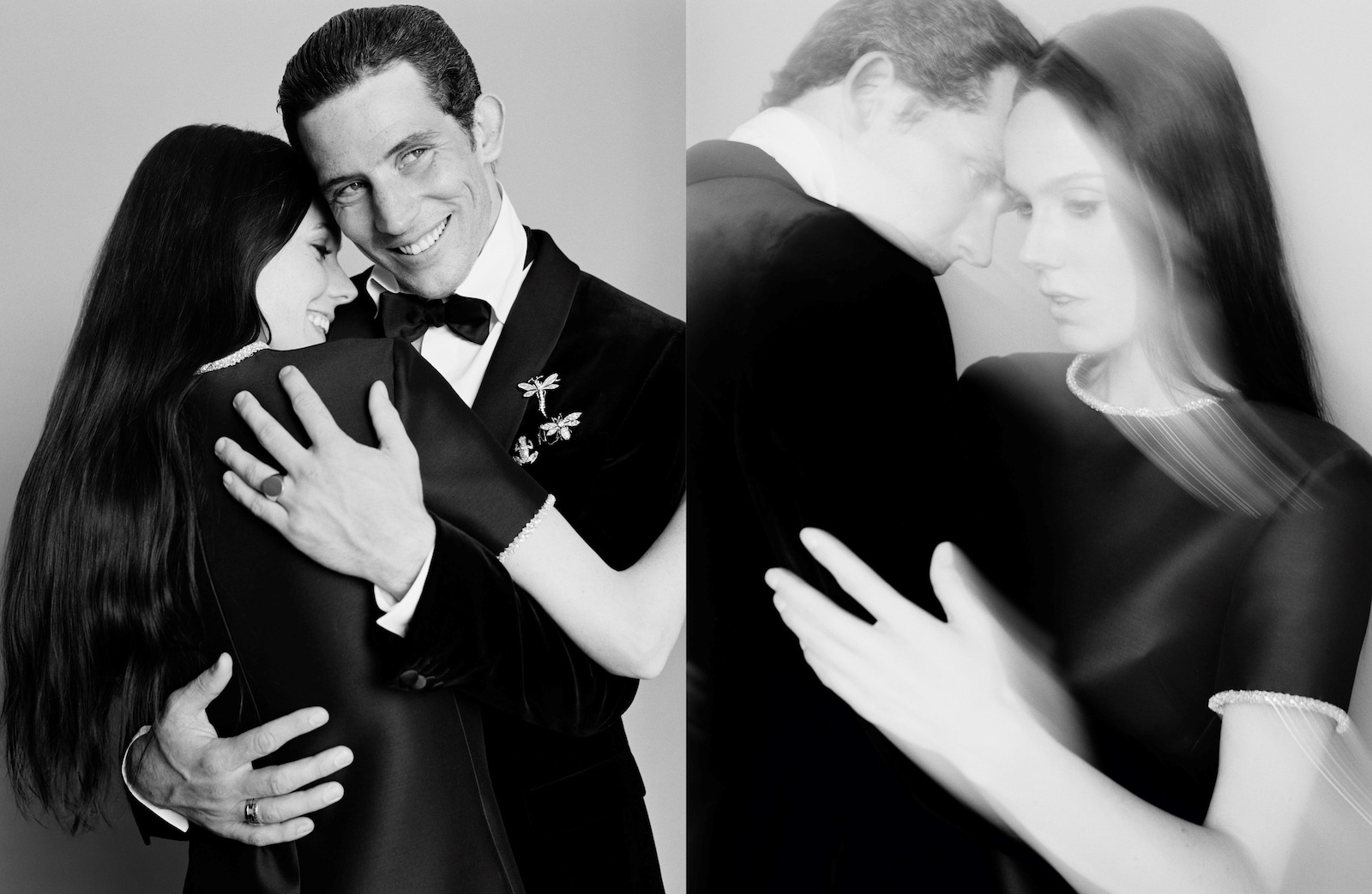
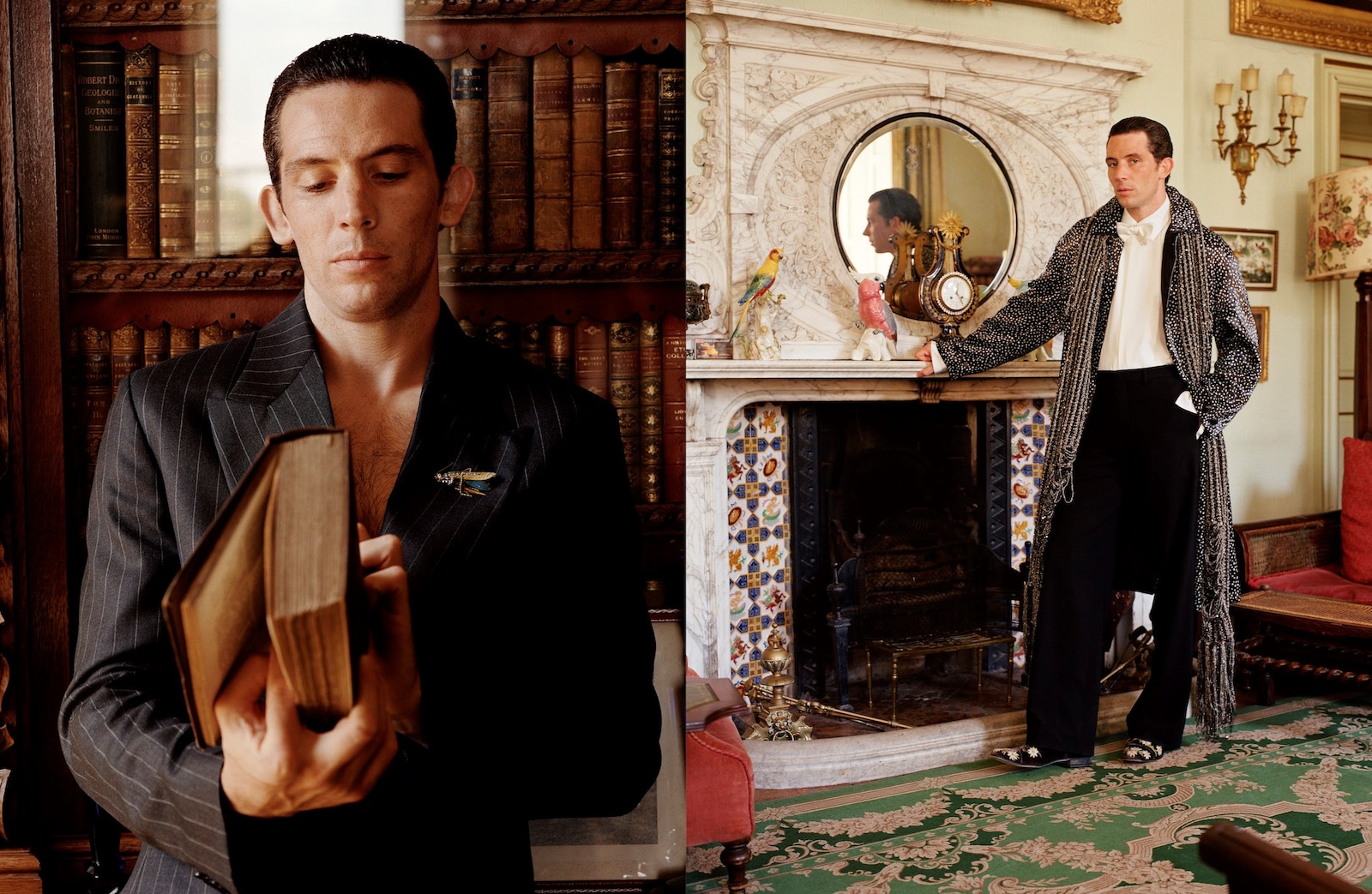
Photography by Alasdair McLellan. Styling by Alister Mackie
SR Can we say that you sang? There are moments when audio comes in – it’s going to be powerful. You’re trying to find a way to use your body to tell the story without it being too over the top, but also Alice was playing around with tone and volume throughout. Particularly in our dynamic, some of the stuff we were doing was out-there. It was big and it felt more authentic than some of the underacting – naturalistic acting – that you would do within other performances. It all felt quite true and quite real.
JOC There was an embrace in the same way on Jack of Spades. It’s embracing the drama, it’s not real life. When you see someone embody a role – and it’s incredible, you’ve done it, I’ve done it – and it feels like you are there with them and it’s very naturalistic and very vivid and real, that’s an incredible thing. But I also love to see clowning and I love seeing performance and theatre. So any chance where you can find truth within outrageous, over-the-top physical performance is like gold dust.
SR Something that can very easily be forgotten about is entertainment, how there’s room for films that are understated and naturalistic, but there’s also an aspect of filmmaking that we cannot forget about, which is, we’re putting on a show. People are going to a cinema. I don’t know if people do want to be reminded of real life. I think they want to escape their real lives and they want to find elements of themselves or to be able to connect to an element of something, but they want to go somewhere else. And I feel like that’s what Three Incestuous Sisters will be. It sounds like Jack of Spades has elements of that, where you’re going to be part of another world.
JOC For sure. Not to the extent of what we’ve just done. What we’ve just done is chaos and I personally think it’s going to be a piece of magic. There is a chance that we have just done absolutely …
SR Career suicide.
JOC Career suicide.
SR That’s what Alice always says – “This will be our last movie.”
JOC She told me her goal in her career was to ruin my career and get me to stop.
SR And in fact, she’s only made it stronger.
JOC Yeah.
SR That’s why we all love you.
JOC Until now.
SR This is the last interview he’ll ever give, because his career’s dead.
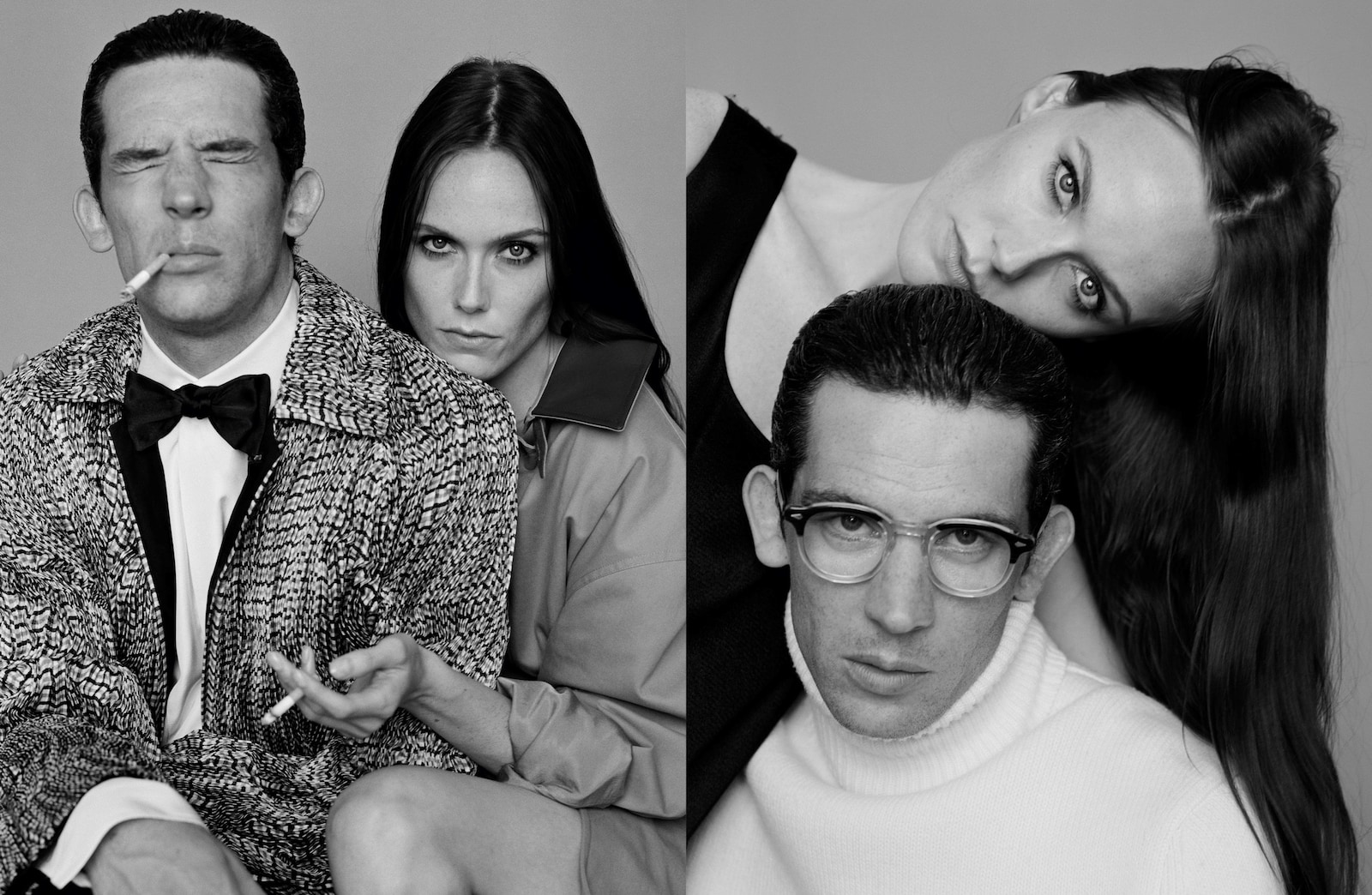
Photography by Alasdair McLellan. Styling by Alister Mackie
Hair: Tom Wright at Streeters. Skin: Mel Arter at Julian Watson Agency using Sauvage Mencare and Forever Foundation by DIOR BEAUTY. Manicure: Jenny Longworth at Streeters. Model casting: Piotr Chamier at Streeters. Model: Kiki Willems at Viva London. Photographic assistants: Lex Kembery, Simon Mackinlay and Jess Pearson. Styling assistants: Dominik Radomski and Hayley Clutterbuck. Tailor: Caroline Thorpe. Hair assistant: Darja Lätt. Make-up assistant: Miruna Antofe. Production: Partner Films. Executive producer: Araminta Markes. Producer: Katie Wright. Production assistants: Lewis Johnson, Darren Sintes and Ben Bond. Post-production: The Hand of God. Processing: Bayeux
This story features in the Autumn/Winter 2026 issue, marking 25 years of AnOther Magazine, on sale internationally on 17 September 2026. Pre-order here. Golden Boy is at the Almeida Theatre, London, until 31 October 2026
Via: Another Magazine





Publicar comentário