Nicholas Galitzine Finds His Power
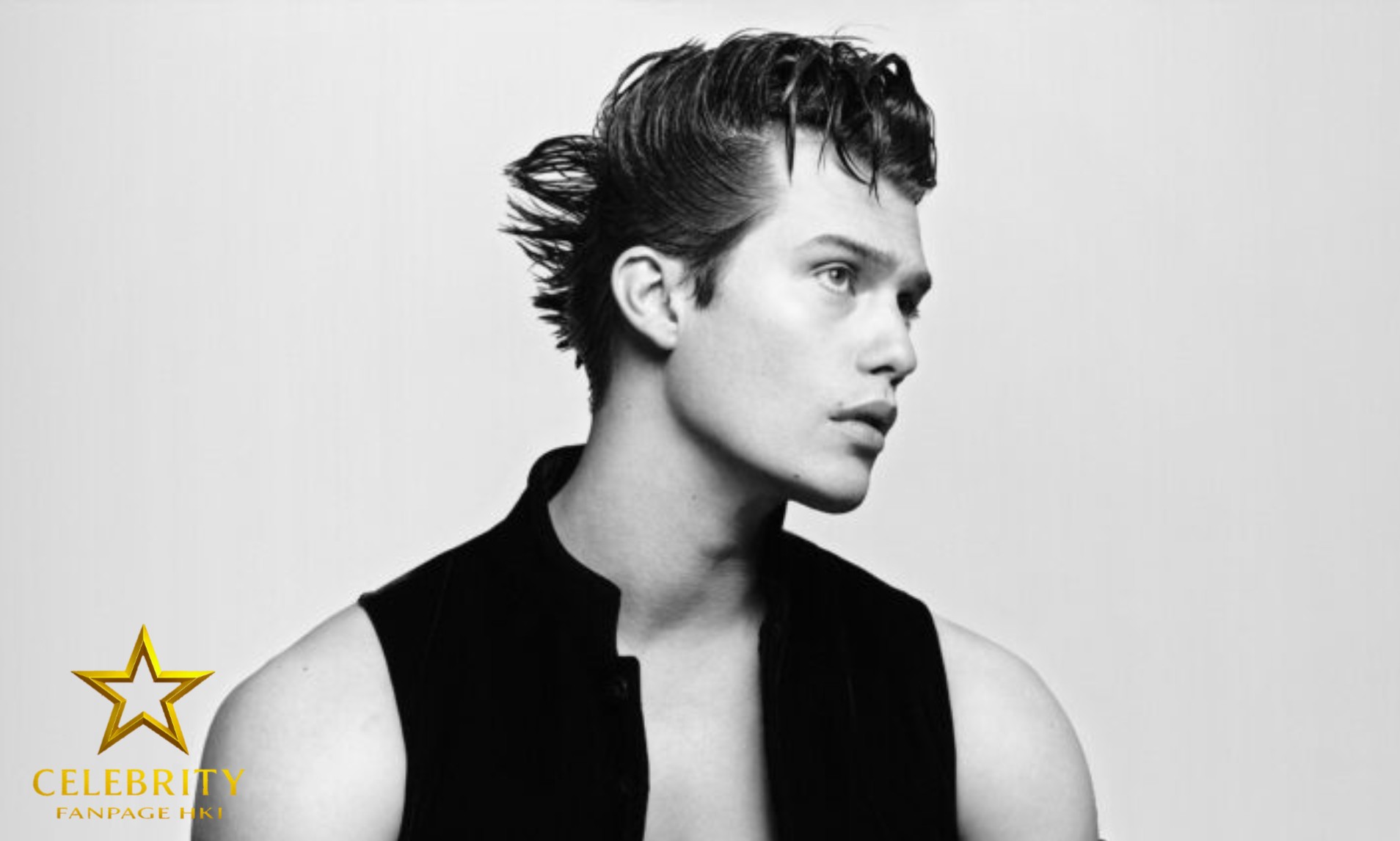
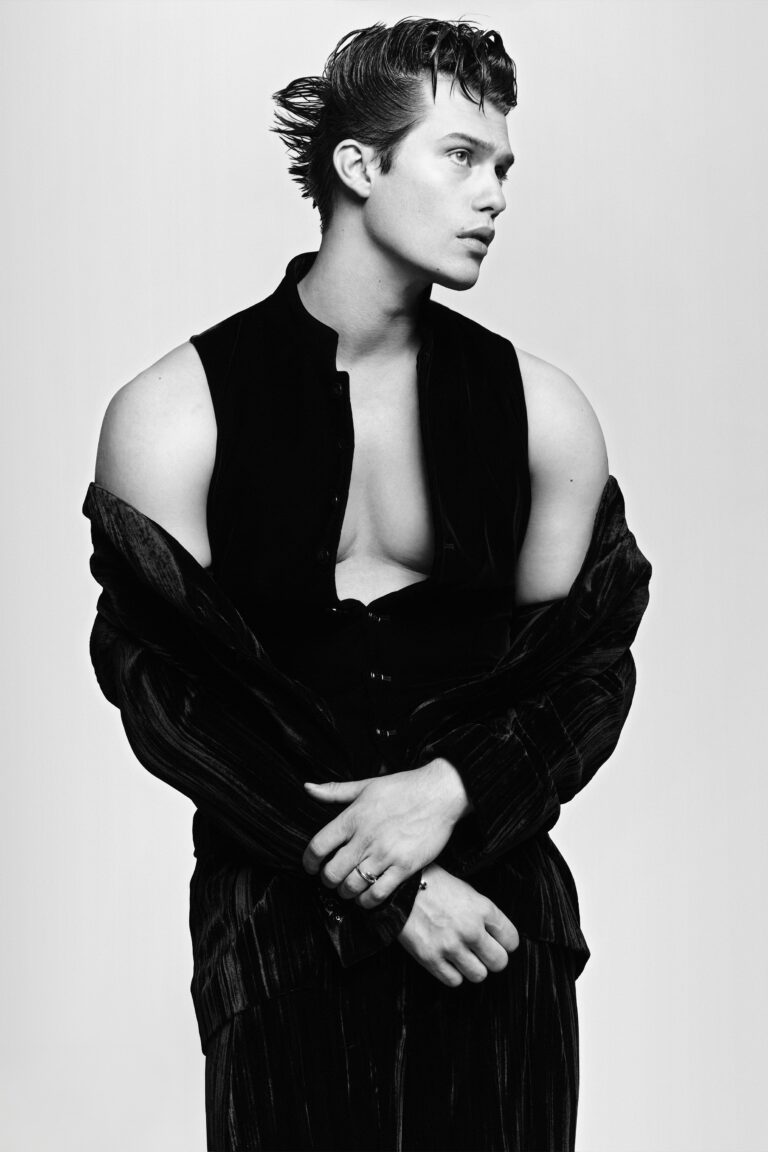
The actor transformed himself for ‘Masters of the Universe’, and he’s not done yet
I was tired of reading about Nicholas Galitzine’s mouth. In multiple profiles and interviews, there it was, some kind of description of his lips. Yes, of course, the actor is stunningly handsome, but surely there should be more emphasis placed on what’s coming out of that mouth, what he has to say as an actor, as a person forging a place for himself in the world.
Interestingly, Galitizine has been on a similar path of proving himself; one that’s just starting to change over his last ten years in the entertainment industry. Because while it can be beneficial to start out as the swoonworthy male ingénue, having a wide-ranging career can take some time and some convincing to powers that be–Galitzine cites among his acting inspirations Christian Bale, Robin Williams, Paul Newman, and Ryan Gosling.
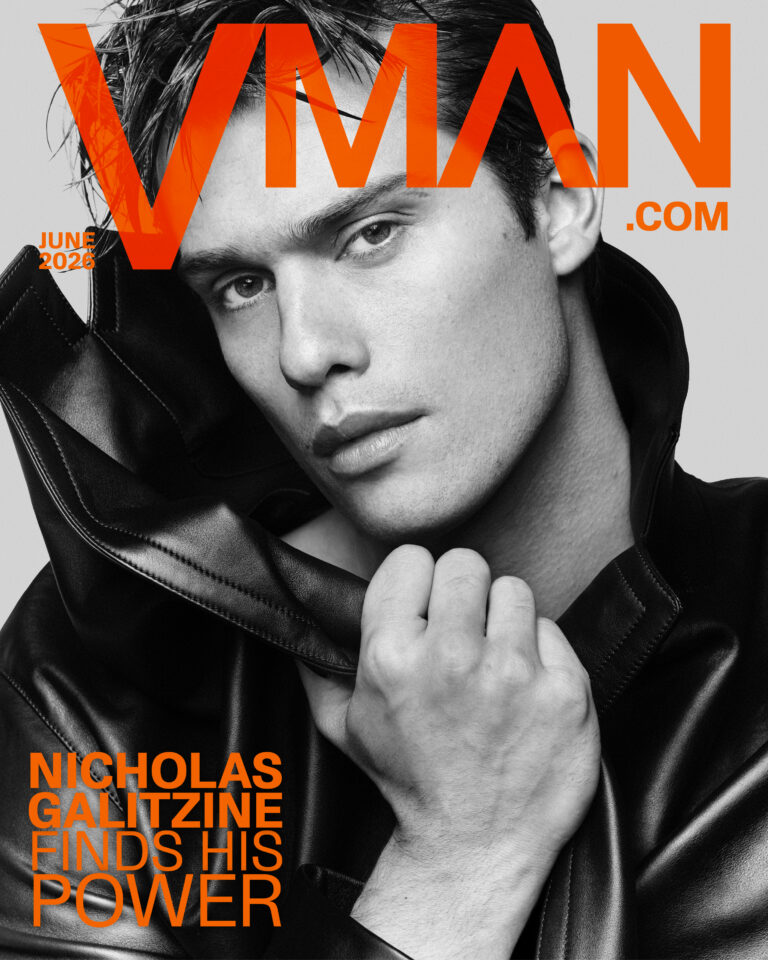
Sometimes that convincing can start with a superhero film. Enter Masters of the Universe, where Prince Adam, aka He-Man, played by Galitzine, must recover The Sword of Power and save his beloved home, Eternia. In the new reinvention of the franchise–which started as a Mattel toy line in 1981 and then became a comic, a beloved animated TV show, and a film, among many other iterations–Galitzine’s Prince Adam is at once heartwarming and goofy. Beyond feathered blonde locks and months of physical training, Galitzine gives Prince Adam a soul, too.
The actor seeks to do this in all of his roles, whether it’s comedic or dramatic fare, and he’s busy creating opportunities for himself to do both. His forthcoming work includes The Return of Stanley Atwell, in which he stars as the main character in a psychosexual thriller alongside Damian Lewis, for example. He’s also been producing, serving as both executive producer and actor on the 2025 indie fantasy 100 Nights of Hero, as well as an upcoming film with director Gus Van Sant in which he will both produce and star. Many of his dream roles are being realized. But as a person shaping himself in the public eye, Galitizine is, too. Here, he discusses not just Masters of the Universe, but swimming against the current of public perception, life as a prince and a Barbie, and the importance of authenticity to his work.
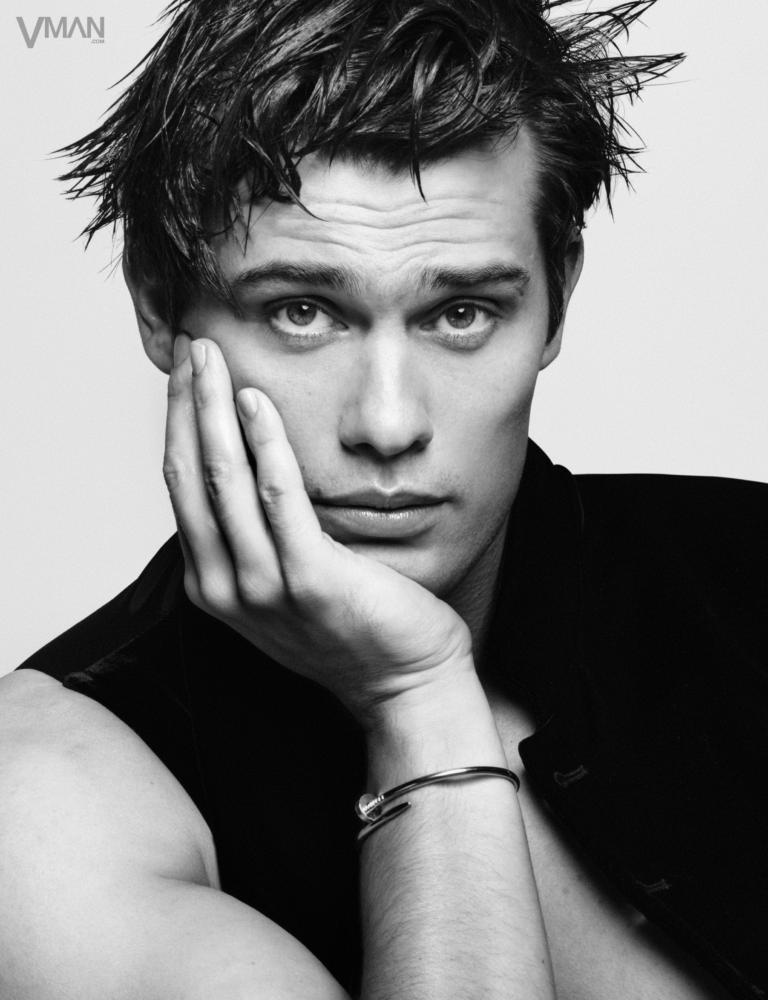
VMAN: I saw that you called working on Masters of the Universe the most fulfilling experience of your career. Why is that?
NICHOLAS GALITZINE: I think it’s because I’ve never been asked to do so much for a role. It was quite an undertaking because you’re working out, doing stunts and fittings for about five months beforehand, then the shoot itself is about six months. You’re doing big action sequences, you have to be comedic, and there are emotional scenes. You get to the end of what essentially becomes a year of your life, and you feel like you’ve gone on this epic adventure. That is very much echoed in the story of our movie, but I remember finishing it feeling very satisfied but exhausted.
VMAN: What did you do after you wrapped?
NG: Honestly, I remember where I was staying, and I think they had someone else moving in. I got basically kicked out the day after I finished, which was a kind of a rude awakening [laughs]. It’s not very often you go from being a god one day to being removed from your premises the next. It’s kind of my own doing, but I’ve worked back-to-back for the last few years, so I had a couple weeks, then I had to fly off to Australia to do my next one. There wasn’t much downtime. I still think I’m feeling the after effects of having shot He-Man. So there’s a holiday on the distant horizon.
VMAN: What were some of the stunts, training, and fitting situations you went through for the film?
NG: I was most excited about the stunts because I can remember [as a kid] running around pretending twigs were swords, always falling over, and getting my head stitched back together. My parents are just very pleased I made it to this point [laughs]. But then you get to do it for real for your job. We had an amazing stunt coordinator called Liang Yang and we had a fun time choreographing all of these things together. I felt really honored by how much Liang let me bring to the process and how I thought this character would move. You go in every day for a few hours a day, you’re on the wires, you’re boxing and sword training. The costume fittings were fun, but extremely daunting. You’ll start the costume fittings pretty much straight away, but I hadn’t undergone my physical transformation yet. Trying these things on, it’s almost disheartening because you can vaguely see what the character will be, but you yourself are not at that point yet, and you feel like a fraud. It becomes encouraging to come in every week and fit the costume a little bit better and better. I got my own Rocky training montage over the course of five months. Honestly, I’ve never actually had so much fun in pre-production. Felt a bit like a kid in a candy store, really. There are so many challenges as well. I remember days where I came in to work out and life was happening and I lost energy for whatever reason and couldn’t lift what I was lifting a couple days before. I’m a very emotional person and constantly micromanaging and fixing these little problems. A lot of actors talk about process, but it’s very much a Process with a capital P, because things are going wrong every single week when you have five months to prep. I really liked that component of it, problem-solving as I went.
VMAN: What went wrong that you had to problem solve?
NG: Oh God, so many things, but even as simple as when I started sword training, I was training with a replica katana, which is very lightweight. Me and my stunt double were getting up to tremendous speeds with this thing, and then the wonderful props guys, they come, they hand you the Sword of Power, and you hold it, it carries a lot of weight, and you’re going, well, I have to seem like the strongest man in the universe, so it can’t ever read as heavy. Then they have to change the weights around, you have to do forearm exercises to be able to hold it, and there’s an actual pragmatic approach to filmmaking, which I like, as well as the creative. Liang Yang, our stunt coordinator, he’s very slim, the way he moves he’s weightless. At my heaviest, I got up to about 105 kilos [about 231 pounds], which is pretty damn heavy. I’d say, okay, you look extremely graceful. How do we do this for a much bigger guy? That was the fun process, bringing my own perspective and my own physicality to all of these different parts of preparation.
VMAN: What were some of the ups and downs of that transformation experience as a person?
NG: I’m very transparent about this. I truly believe it was one of the most challenging things I’ve ever done. It’s very strange living with a body you don’t recognize, for better or worse. At first, I didn’t have a lot of time to put on all this size. You inevitably will put on fat as well as muscle, and you don’t fit into the clothes you usually do. I always sleep on the right side of the bed, so there’s a divot in the right side of the bed. That’s strange. Especially given the timeframe, I had to start my cut while we were shooting. It’s just the pure exhaustion of acting 12, 13, 14 hours a day, and between every take or setup, I’m pedaling on the exercise bike. But I can’t let that affect the acting, which is the most important thing. There’s this misconception in fitness media, whether it’s influencers or whatever—just the sheer workload and time you need to do that is not something most people can do. You have to commit hours every single day, you have to be perfect with your diet. I had a wonderful chef and a wonderful trainer, a few trainers, who guided me through the process. I knew it would be a huge undertaking, but it was even harder than I thought. I luckily had just worked with Hugh Jackman right before we started filming, and we talked a fair bit about the process. He made a point to me that when he did the first X-Men, compared to the other iterations, it was such a steep learning curve for him, but once he did it, he had learned so much that it became easier. If we get more iterations [of Masters of the Universe], I hope it will be easier. But I was very lucky to be in the position in the first place, so take it all with a pinch of salt.
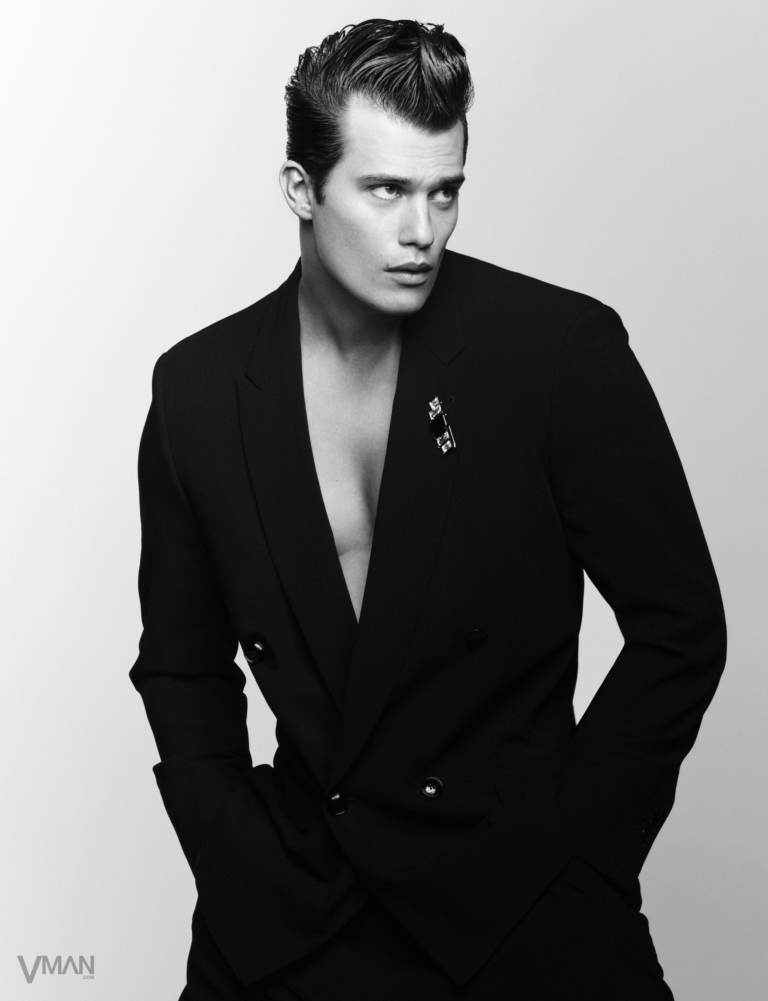
VMAN: And it’s not just the physical manifestation of an actor’s malleability; it’s also having to do it in the public eye.
NG: Listen, all of us actors, we try not to go on the internet. Well, I’m not going to speak for most of us. Sometimes we venture in, we see what’s being said. I have a wonderful deal with Armani, and I’m very grateful to be working with such a prestigious, iconic fashion house, but I had to go to an event with them mid-bulk, and I was feeling so strange in myself. I didn’t recognize myself; my face looked so different. People are saying stuff, “He looks so different,” and everything like that. Ultimately, what I always maintained was, I’m not a model, I am an actor, I’m going to change for all of my roles. I want to embody versatility throughout my career. This is something I’d never done, and I had to fully commit. It’s a practice in faith because you’ve got a guy saying, “Hey, eat this amount of calories, lift this amount of weights, and I can pretty much guarantee you look like this at the end.” You don’t look like that now, and you won’t look like that for another few months, but you have to trust the process. I tend to retreat from the public eye anyway when I’m working because it doesn’t serve me–I think it’s quite energy-consuming for someone like me. It was certainly a lesson learned: people don’t live the process with you. They may see you in a moment, but you’re with yourself every day, and you’ve got to be okay with yourself every day. It becomes much more of an introspective process.
VMAN: With that in mind, descriptions of your roles in the past have been, “heartthrob, prince,” and so on. I’m wondering how you relate to that, and if that was affected by your work on this film as well.
NG: As monikers, those don’t necessarily encapsulate what I want to do, who I am, and how I see myself. Especially in the last few years, I feel like I’ve been able to gather more agency in my career. It’s about diversifying the projects you do. I just wrapped a tiny little movie—you can make this movie probably 100 times with Masters of the Universe’s budget–where I play morally gray characters. I did a lovely indie movie called The 100 Nights of Hero, where I play a morally gray character. I have quite an exciting couple of years coming up where I feel the roles are extremely different, so who knows, maybe people will ascribe different monikers to those, but I’m very happy being where I am at this moment in time, so I can’t complain.
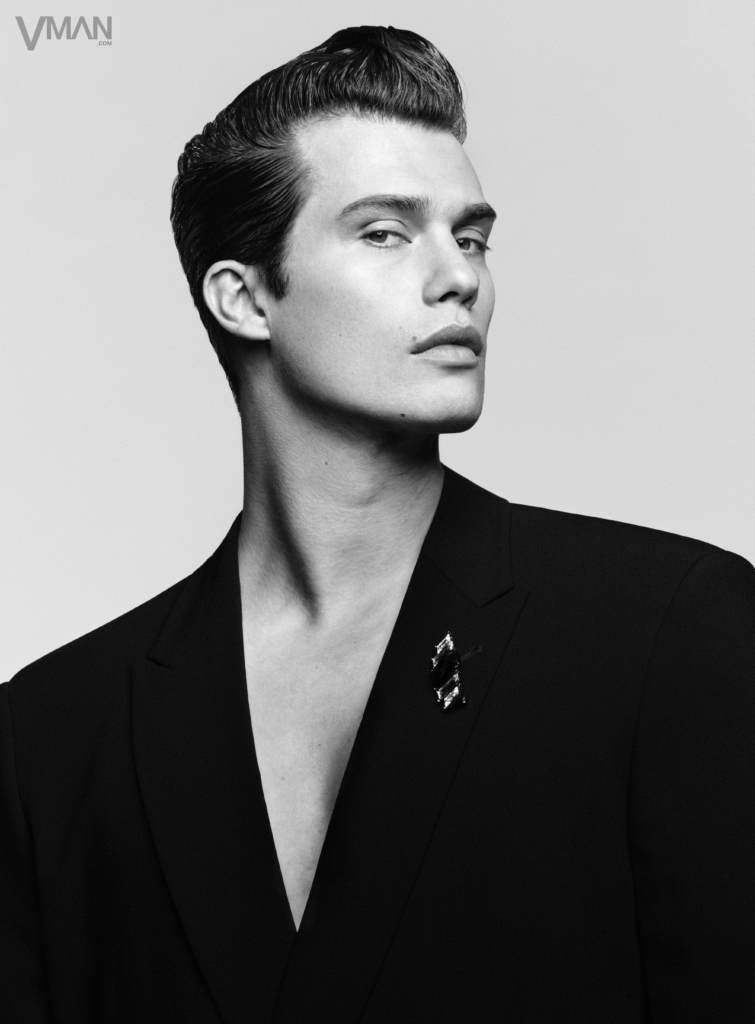
VMAN: How do you see yourself?
NG: God, I’m just trying not to be self-deprecatingly English right now [laughs]. Like everyone, I contain multitudes, and my interests have always lain in many different places. The industry was about, in my experience, the right people allowing me the opportunity to show different shades to who I am. A lot of the time people don’t really want to give you that opportunity, because they see you how they see you, and that’s how they want to define you. I’ve been very lucky at different points in my career. The Idea of You came out, which was something broader but had more mass appeal, and then I also had the show Mary and George come out, which was helmed by this wonderful filmmaker, Oliver Hermanis. Doors opened up for me in areas I wasn’t previously considered. The Idea of You was fantastic, and a lot of people saw it, but people had seen me in that realm before, so it’s really just being afforded the opportunity to show the shades that exist within you already. One of my absolute favorite actors, Robert Pattinson—I admire him so much–and Jacob Elordi are people who have also been seen in a certain way, and you have to swim against the current to allow people to see you as anything other than that. I hope to emulate even a fraction of what they’ve done.
VMAN: What does that feel like, swimming against the current?
NG: The first 10 years of my career, that was me swimming against the current, because people were going no, we’ll get George MacKay, he’s way cooler. Mary and George was huge for me because it was Julianne Moore, who is an icon, and I still can’t believe I’ve got her contact in my phone book. But I think people seeing me in a director-driven show has led to me being able to find the stories I want to tell. I produced 100 Nights of Hero. This movie I just did, The Return of Stanley Atwell, I’ve been on that with the director for two years putting that together. I’m doing a film with Gus Van Sant next year, which I’m really excited about. Now I’d say the current has changed, and I’m thankful that it has. It’s exhausting fighting against people’s interpretations of you. Even feeling like you’re doing good work in movies that aren’t great, it can so easily get lost at times. For me, making things that resonate with people is important. That fulfills me and keeps my energy going.
Luckily, there are projects I am putting together myself already, so there’s a lot happening in the next couple years. I think a lot of my dream roles are being realized, but also it’s very much working with directors I really admire. What a gift to be able to do a job where you can learn from every role, taking on more and more information from people you work with.
VMAN: So you’ll be producing more work as well?
NG: We’re in a very interesting, transitional time in our industry. Having worked with Amazon a lot now and knowing people on the studio side, hanging out and meeting a lot of these directors I admire, it’s very clear there are people chasing whatever may be in the zeitgeist, and it’s a scary time to take risks on ideas that are completely original. For me, it’s like, what do I want to see that isn’t being seen at the moment, and what have I not done? This project with Gus that I’m doing, hopefully next year, is something I’m both producing and starring in. To me that feels like the most sensible thing, when you have the power to greenlight projects and work with people you admire, both actors and directors. Michael B. Jordan, the way he’s blossomed into this multi-hyphenate, I think is actually surprisingly rare. You’d think more actors would take the onus. But working like Michael B. Jordan is completely the genesis of the idea. That’s another person I really admire, and I’m very happy to see him doing so well. That’s where my interests lie for the future, and certainly the next few years.
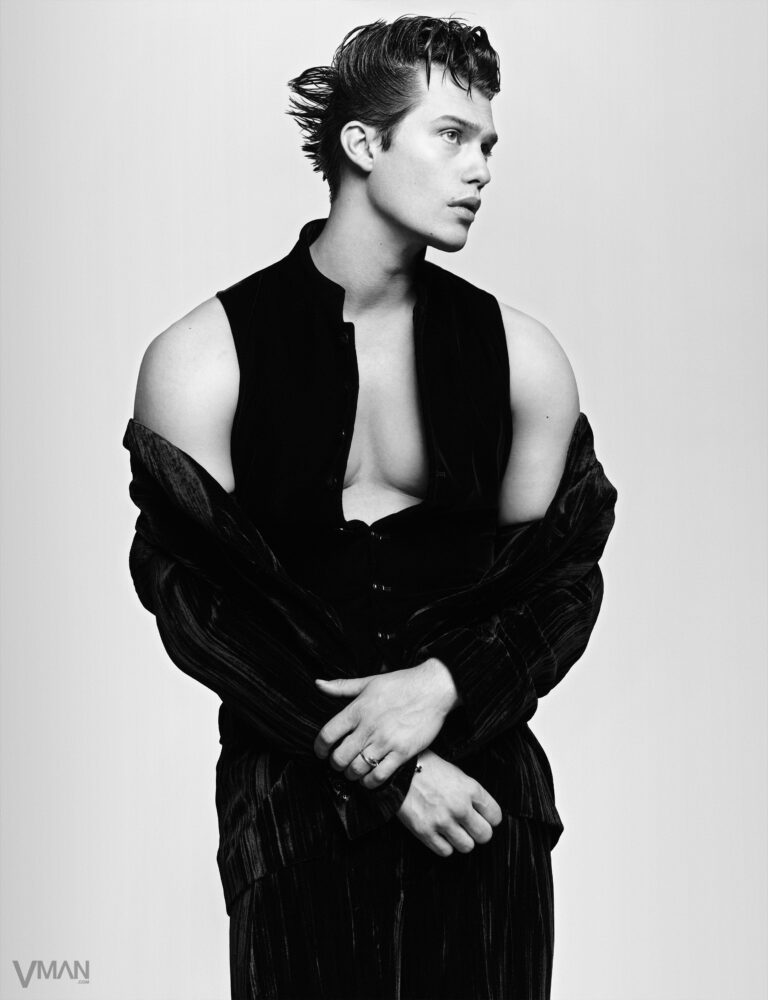
VMAN: You’ve talked about feeling imposter syndrome. Do you still experience that? What brings it on, and what do you do to counteract that?
NG: I’ll tell you what I do to counteract it.
[Galitizine leaves the screen then reappears with a doll of himself as He-Man, produced by Mattel in time for the movie]
So I just stare at this guy every single day.
[Both laugh]
What a bizarre thing. I never thought I would be an actor, let alone be a Barbie. So I think it’s something that grounds me. It’s easy to surround yourself with sycophantic people who elevate your ego and your confidence. It’s easier in some ways, when you are elevated, to traverse this tricky career. But the things I value are not entirely in line with that. The answer is truly, it’s a daily thing. There’s times where I feel really great in my work, and there’s times when I just have no idea where I am or what I’m doing or if the choices I’m making are right. But I have a lot of people around me who are very encouraging, who tell me I’m doing the right thing. You never want to take too much outside validation, but it does energize me when I feel like I’m doing things that people really enjoy.
VMAN: What do you do to work on acting as a craft?
NG: The truth is, what I do to work on it is work [laughs]. I’ve not stopped working for three years. I’m going on to this wonderful project just after this press tour, and that will either be my seventh or eighth movie in a row. Working with Hugh Jackman, Emma Thompson, Idris Elba, Ben Stiller, and next Damian Lewis, there’s just so much information learned watching. I can’t overstate how important it is to also just be a person and watch people. I love watching people. There’s a lovely bench in the park near where I live, and I sit there, watching the strangeness of…it’s just amazing what makes us us, isn’t it? I never went to drama school or did acting class, and for me, acting has always been a very instinctual thing. These are my unofficial classes. When you spend so long in the industry, some actors retreat from people. They put up their big hedges and big walls to protect themselves from the eyes, which is understandable. Something I’m going through right now is balancing how to live as a person of this world, but also protect myself.
VMAN: You’ve talked about the importance of bringing humanity and groundedness into your work, even if it’s something lighter. Where does that desire come from?
NG: I feel the need to be authentic quite acutely, almost paralyzingly. Starting when I was younger, if something felt inauthentic to me, it felt extremely jarring. He-Man’s a great example of bringing a sense of humanity and emotion, because you’ve got this subject matter that’s so broad and the movie’s so much fun, but you’re also dealing with a person who’s grown up being told he was crazy and being gaslit. He’s still so hopeful, but is constantly let down by everyone around him. You have to approach it from a sense of humanity. It can feel quite hollow if there’s not something real and tender at the core of it, and that’s hard to do. There are times where I feel like I fail at that, but it’s certainly always the goal, regardless if it’s a big action movie or a tiny little indie.
Photography Luigi & Iango
Fashion Anna Trevelyan
Creative Director / Editor-in-Chief Stephen Gan
Grooming Jamie Taylor (A-Frame) using Roz Hair
Casting Greg Krelenstein (GK-LD)
Editor Kev Ponce
Videographer Bell Soto
Video Editor Santiago Montes
Executive Producer Alexey Galetskiy
Production Coordinator Ashton Wilson
Production Assistant Max Doraev
Fashion Assistants Dougie Newton, Tatiana Isshac
Digital Technician Amanda Yanez
Lighting Director Tutu Lee
Via: VMAN


Publicar comentário