Jon Bernthal Is Going to Die Trying
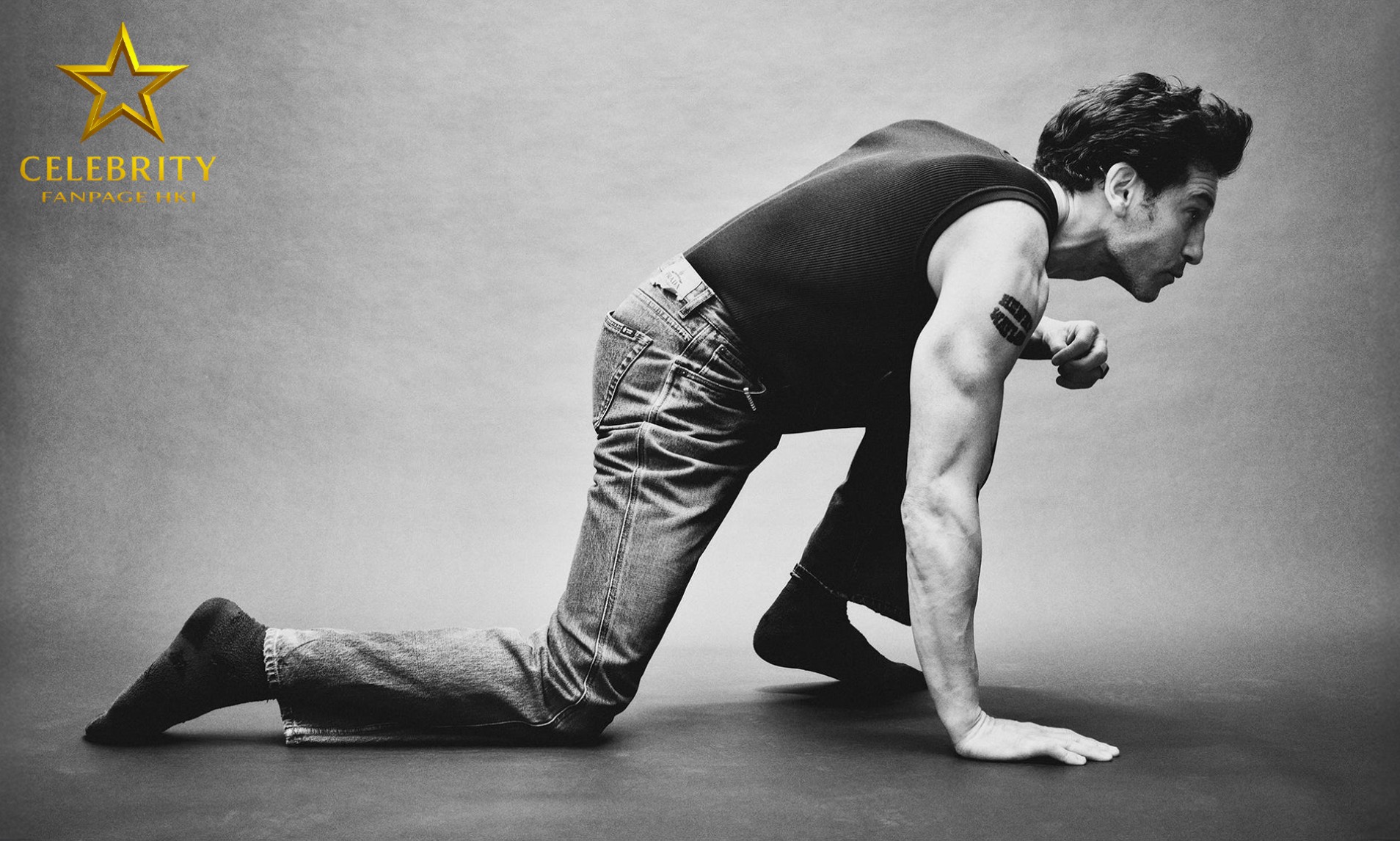
This year, he’s in everything: The Punisher, The Bear, Spider-Man: Brand New Day, The Odyssey, even goddamn Broadway. Wait until you hear what he does when he’s off the clock.

The guy who plays the Punisher offers to make me a cup of tea. When I decline, Jon Bernthal, forty-nine, reaches for a square tin box and pops off the lid to reveal a pile of purple gummies. I am certain there’s weed in them. “Want one?” he asks, pushing the tin in front of me. I pause, eyeballing them. “They’re soft throat lozenges. Sugar-free. These fuckers are good, dude.” My throat is fine, but I oblige. Bernthal drops one in his mouth and leans back in his chair, assuming the position for a raw and honest talk about life.
An hour earlier, he met me inside the stage door at the August Wilson Theatre in Manhattan—where he’s starring in the Broadway adaptation of Dog Day Afternoon—dressed in blue jeans and an orange hoodie, an American flag on the left breast. Under the flag are the words “We Support the Troops.” He was shirtless beneath the sweatshirt, a tattoo on his left pectoral that says “Lil Bird,” his nickname for his wife, Erin, peeking out. He had the hood pulled over his head, which was already covered in a stocking cap. He wore what looked like wrestling shoes on his feet. They’re not wrestling shoes, although he did wear them to grapple with one of his sons earlier that day.
This is exactly how I expected Bernthal to dress, given the roughneck originality of his work: He transformed The Walking Dead into a show about morality; he blistered the screen with profanity and chaos, opposite Brad Pitt, in Fury; he found the soul of an ultraviolent superhero in The Punisher. The independent film Small Engine Repair, in which he plays a townie from Manchester, New Hampshire, and We Own This City, embodying real-life crooked Baltimore cop Wayne Jenkins, are platonic ideals of a Bernthal performance: He can be charming and funny, pulling hard on a cigarette or sipping on a Mike’s Hard Lemonade, walking the line between tenderness and menace. Against your better judgment, you’re drawn to his characters, mortal flaws and all.

“He somehow makes you deeply care about a deeply complicated person,” says Christopher Storer, the creator of The Bear, in which Bernthal plays magnetically unhinged Mikey Berzatto, a role that earned him an Emmy.
From the stage door, Bernthal led me up a narrow staircase at the century-old theater, past a warren of dainty dressing rooms—one with the door open and Ebon Moss-Bachrach inside, sitting on a loveseat, reading a used copy of In Cold Blood. (He’s Bernthal’s jittery sidekick in the play.) Disheveled and bespectacled, he rose to greet us. “We’ve met, haven’t we?” he said. I told him we’d been guests in the same box at the U.S. Open last September, and his face lit up in recognition. Like his close friend Bernthal, a master of playing tightly coiled hotheads (think Richie on The Bear), he’s a sweetheart in real life.
The walls in Bernthal’s dressing room were plastered with inspiration: photos of his acting coaches and mentors, his family, and Al Pacino. A gray sweatshirt with the name “The Original Beef of Chicagoland” emblazoned on the front—a nod to The Bear—dangled from a hanger. On the mirror was a handwritten note on a sheet of lined legal paper that said: “Let yourself be drawn by what you really love.” The book On the High Wire, by Philippe Petit, a gift from Moss-Bachrach, was laid open mid-read, ostensibly a memoir by the French acrobat who, in 1974, walked a tightrope without a net from one World Trade Center tower to the other, but it reads more like philosophy.
Suddenly, I feel a metaphor for high-wire acts coming on.

Vintage flight jacket; vintage 1940s jersey, available at Stock Vintage, NYC; trousers by Brunello Cucinelli; sunglasses by Jacques Marie Mage.
If you’ve read anything about Bernthal—including Esquire’s January 2018 cover story—then you know him to be a study in contrasts: an actor with a comically splayed nose that’s been broken fourteen times who studied acting in Russia and at Harvard, rescues puppies, and feels all his feelings. Not the first thing you picture from someone who almost killed a man. As the much-told tale goes, it was 2009, Venice Beach, California. Bernthal, firmly in his total-fuck-up phase, knocked a guy out with a single punch, almost killing him. For Bernthal, who knows what it feels like to have a barstool cracked over his back, this wasn’t an unusual night. When the victim finally woke up, the prospect of a lengthy prison sentence became a misdemeanor. In exchange for that bit of grace, Bernthal dedicated himself to starting a family and becoming the best husband, father, actor, and provider he could possibly be. He carries with him a profound sense of gratitude for all of it.
Even so, he still gets restless—perpetually on the hunt for the kind of challenge that scares him shitless, like, say, doing live theater in a role immortalized by Al Pacino. Or walking a wire 1,400 feet in the air.
“The point of that book is that’s where you feel the most alive,” he says of Petit’s memoir. “Walking out onto that stage every night, where real failure and humiliation and glory and beauty and devastation is totally possible, that is walking a high wire. But so is being a dad, so is being a husband, so is the decision every day to try to be the kind of man that people can count on.”

Shirt by Canali; trousers by Magliano; vintage belt, available at Stock Vintage, NYC.
He is clear-eyed about what he wants as an artist—namely, to work with people who also consider the work sacred. “I kneel at the altar of this thing,” he says of his chosen profession. He brings this intention, this not-fucking-around attitude, to all aspects of his life. He has three kids between the ages of eleven and fourteen, plus a five-year-old niece he’s looking after. He takes his fifteen-year marriage to Erin very seriously. He works out. He maintains a vast array of friendships. He refuses to fail at any of these responsibilities. He is, more than anything else, propulsive—bulldozing himself beyond exhaustion so that he can experience everything, even at the risk of failure. “I’m a grinder, I’m hungry, I’m looking for more,” he says. The paradox of Jon Bernthal is that he’s built a full life and a successful career in Hollywood, but only by starving himself of the notion that his many accomplishments deserve real, lasting satisfaction.
Last August, Bernthal and his wife moved the family from Ojai, California, to a D.C. suburb in time for the school year and the start of youth football season. It was a culture shock. The family had lived in Ojai since 2015, and his children are products of this “beautiful, idyllic place,” as he puts it. But that was part of the problem. Bernthal and his three brothers—Jon’s in the middle—grew up in the D.C. area. He wanted to expose his kids to diversity, urban grit, an international community, a place where important decisions are made. “When my kids were ten years old, they’d never taken a subway or a bus to school,” he says.
But it really was Bernthal himself who necessitated the move. He was going to spend the better part of a year in New York for the play, and he needed his family nearby. The sacrifice his family made for him is not lost on Bernthal. “Everybody gave up something,” he says. “My kids love Ojai. Their whole life is there. It incentivizes me to work even harder.”

Jacket by Loewe; trousers by Wylie Welling.
His wife has shouldered the lion’s share of the work at home—not easy, he acknowledges. But she’s also a former ICU nurse, a product of Pittsburgh, who’s just as tough as any character Bernthal has ever played. One of his sons, however, has had a tough time adjusting to a new school, with the other kids being less than welcoming.
“It’s hard to see,” Bernthal says.
And yet this same son had an undefeated season in wrestling, led his football team in tackles, gets straight A’s, bought himself a boat and fishes on the Potomac—which is to say, he’s not a kid who escapes into the black hole of his phone.
“He’s the kind of kid you can just be listening to music with, and then you look over and you both have tears in your eyes,” Bernthal says. “He’s beautiful, man, but he’s really tough. He’s everything I wanted to be as a young man.”
At one point, Bernthal taped a sheet of paper to the mirror in his dressing room listing the names and numbers of the dads whose kids were giving his son a hard time. “I would call these guys and be like, ‘Look, if this was my son, I would want to know that he was being a part of it,’” he says. “Some dads were mortified and said this would stop immediately, and some dads weren’t.”
“Look,” he continues, “I’m away. But I’m going to get his back no matter what. Your kid’s having a problem, it trumps everything. It’s easy to get really self-focused and make it about what you need. For me, the greatest service I’ve ever done for myself as an artist, as a man, and as a human being is to become a dad and become a husband, a real husband, and to live for them. The only thing we can control in our own actions is how we roll out onto the streets and how we treat other people. I don’t know, man. I genuinely believe in that shit.”

Jacket by Louis Vuitton Men’s; vintage 1950s tank, available at Sumshitifound, NYC.
In the wee hours of Monday, April 13, Bernthal parked his Ford Raptor near Baltimore/Washington International Airport. The fuck am I doing? He thought.
Less than twelve hours earlier, he was taking his final bow at the August Wilson Theatre and got into his truck. Hundreds of fans were outside the stage door, clamoring for a glimpse, a selfie. Any other day of the week, Bernthal would’ve stuck around, but on Sundays he leaves immediately, drives to D.C. to eat dinner and spend the next thirty-six hours with his family before hightailing it back to New York for the Tuesday-evening performance. During the drive, he imagines the reception: His wife will throw her arms around him, his kids will tell him how much they love him, his dog will lose his mind.
“And then you get there and you realize nobody’s fucking running over,” he says. “The kids are at friends’ houses; everyone’s fucking busy.” Then his wife tells him to get back in the truck and go pick up their fourteen-year-old son, who’s flying back from a family trip in Florida, at the airport.
Things go from shitty to super-shitty when he learns that his son’s flight was horribly delayed, now due to land at 4:00 a.m. Not in the mood to be recognized and selfied, Bernthal hunkers down in the cab of his truck, listening to a podcast and trying to sleep.
This shit ain’t working, he thinks.
A few hours later, his son hops in.
“We talked the whole way,” Bernthal says. Back home, they go up to his son’s room and watch movies until the sun comes up.
“At a weaker time in my life, I would’ve been so fucking pissed that things didn’t go the way that they were supposed to go,” he says. “I wouldn’t have thought, Holy fuck, here comes my son who just flew by himself; there he is and he’s becoming a man.
“That night was great.”

T-Shirt and trousers by Dior; belt by Artemis Quibble.
You could say Bernthal is the type to run through fire for who and what he cares about, and he expects the same from anyone he works with. He’s acted for first-ballot hall-of-fame directors, including Scorsese (The Wolf of Wall Street), Taylor Sheridan (Wind River), Denis Villeneuve (Sicario), James Mangold (Ford v Ferrari), and, most recently, Christopher Nolan. This summer, Bernthal plays Menelaus, the king of Sparta, in Nolan’s outrageously anticipated take on The Odyssey.
“Nolan is a guy who was literally put on earth to do the very thing that he’s doing,” he says. “There’s no one working as hard as him. It is almost inhuman, his appetite and hunger to work and to drive forward. He is the quintessential perfect leader. You would follow him anywhere.”
When he finished his scenes, Bernthal took some of his fellow actors out for dinner. “I told them, ‘Whatever you think in the day-to-day, just know you are going to look back on this and it will be the defining moments of your life. These relationships, these friendships, what you guys have built together, not because you’re part of this unbelievable movie, not because it’s got to be the biggest movie in the world, but because of the blood, sweat, and tears that you guys laid out with each other, for each other, every single day.’”
Bernthal loves a pep talk, especially when he’s the one giving it. He comes by it honestly, having played professional baseball in Russia and coached his kids in basketball and football.
“I’m a big halftime and last-practice-before-the-game speech guy,” he says.

Shirt by Canali.
Christopher Storer is another writer/director for whom Bernthal would run through fire, and Storer feels the same. On May 5, ahead of The Bear’s final season, FX released a stand-alone episode, “Gary,” which is a flashback to an excursion that Bernthal’s character takes with his best friend, Moss-Bachrach’s Richie. They drive from Chicago to Gary, Indiana, to drop off a package. Bernthal and Moss-Bachrach wrote the episode.
“We smoked a joint and walked down to the Bowery Hotel from Times Square,” he says. “We literally sat on my balcony and wrote the thing.”
Bernthal had John Cassavetes in mind as he conceived it, particularly the movie Husbands. A basketball scene in “Gary” will look familiar to anyone who’s seen the Cassavetes movie. According to Storer, they showed up at a basketball court in Gary and shot the scene with a handful of local kids. Bernthal and Moss-Bachrach improvised most of their dialogue and blocking.
The second half takes place in a bar where Bernthal’s character meets a woman named Sherri from Gary, played by Marin Ireland. They make a connection; he confides in her while they share a cigarette inside a bathroom stall. Storer says it was shot to feel like a memory. But it made me wonder whether the Sherri character is, in fact, a hallucination.
“It’s up to you,” Bernthal says. “But we never set out for her to not be real. I think we all really love the phenomenon that sometimes you can meet somebody, and you can just lay it all the fuck out there, like it takes a stranger to do it.”
Last May, Bernthal was slated to appear opposite Ireland in the play Ironbound at the first-ever Ojai Theatre Festival, which he financed and co-founded. Given his schedule, Bernthal had just five days to rehearse.
Describing the different parts of his life as buckets—“each child is a bucket, my wife is a bucket, my friendships are a bucket, work is a bucket, and you got to just try to keep them filled”—Bernthal says that at the time, the bucket that was his wife was “fucking low. It was on empty.”
But he said to her: “Look, I’m not going to be able to do this without you. I know how busy you are. But I really fucking need your help.”
“She put the whole festival together,” he says. “She did it with such beauty. It was for the community. It was for the kids. It was for me. It was for us and what we stand for.”
Telling me this, he’s overwhelmed with emotion, some of it surprising. “I really am dying for her to feel that way about me,” he says. “It’s aspirational. Our marriage is aspirational. It’s one of these things—you’ll never lick it, man. You’ll never have it perfect, but I’m going to die trying.”

Vintage thermal, available at Doppelgänger, NYC; trousers by Balenciaga.
It’s endearing (and intense), his dedication to his family and his craft. Storer recalls the dinner scene from “Fishes,” the Bear episode that earned Bernthal an Emmy. It is arguably the most viciously bonkers family dinner ever seen on TV—Bernthal all raging id, in the throes of mental collapse. Storer felt they’d captured Bernthal’s ultimate moment in the first two takes—just before Jamie Lee Curtis’s character crashes her car into the house—but he wanted one more. “I’m about to call action on the third take,” Storer tells me, “when Jonny says, ‘Hold on one second,’ and runs up to me and whispers, ‘Yo boss, I’m going to flip this fucking table.’ And I’m like: ‘Let’s go.’” Storer made sure to capture the reaction of the scene’s other actors, who’d not been given a heads-up. That was the take that appeared in the episode.
“This is a person I love and know well,” Storer says. “And as a viewer, what I adore about watching Jon is I have no clue what he’s going to do next.”
Then there’s the Punisher. Early on, succumbing to the Marvel machine did give him pause, but the Punisher is such an unusual superhero that it feels almost tailor-made for him.
The titular punisher is Frank Castle, a military veteran with PTSD whose family is murdered after witnessing a mob killing. In retribution mode, Castle dons a shirt adorned with a skull, arms himself to the teeth, and exacts his revenge on criminals in an effort to fill the void left by the loss of his loved ones. He is an emotionally fraught character, and the violence is so extreme, it’s unnerving. To play the role, Bernthal imagines how he would react if such an unspeakable act happened to his own family.
The Punisher ran for two seasons on Netflix from 2017 to 2019. On May 12, Disney+ drops a new episode, “One Last Kill,” written by Bernthal and Reinaldo Marcus Green, who also directed the episode. The two had previously worked together on King Richard and We Own This City.
“I was so curious what you thought of that episode,” Bernthal says to me.
I tell him I was shocked by the violence. The bad guys murder a small dog!
“It’s a lot,” he says.
“I couldn’t believe—”
“They let me do it?” Bernthal interjects.
“Yeah, and that this is going to exist on Disney+, in the same ecosystem as, say, Lady and the Tramp.”
“It’s crazy,” he says. “Crazy.”
“Did they flinch at the violence?”
“Listen man, I couldn’t believe the dog gets killed,” Bernthal says, even though he co-came up with that choice bit of sadism.
This summer, the Punisher will appear in Spider-Man: Brand New Day, in which Bernthal will play opposite his friend Tom Holland. (“I love him; I love his other half”—he’s referring to Zendaya—“I love them as a couple.”) Bernthal isn’t opposed to new horizons for the character, so long as it makes sense. “Every iteration over the last few years, they were like, ‘What if we found him and he’s now teaching English?’ These were literally things that they were pitching. ‘What if he’s a chess grand master now?’ I was like, ‘Look, dude, the one thing I’m not going to do with fans is take a giant jump.’”
In “One Last Kill,” Castle is at rock bottom, contemplating suicide. Bernthal says Castle is suffering from a condition that’s prevalent among special forces veterans in which they experience extreme and utter meaninglessness. “You cut ties with every pillar of belief, whether it’s religion, whether it’s the Marine Corps, whether it’s your family,” he explains. “Basically anything that was important to you, you start to see as a corruption. You look at yourself as the reasons for the problems in the world around you, and 99 percent of the time it results in suicide.
“I really wanted to show what do you do when you dedicated your life to something and there’s just nothing more to do,” he says. “It’s super dark. It’s like a super fucking dark thing….We’re in a place where I do think that this is the level of psychological complexity and just blunt violence that the fans really want for this character. I’m really down to keep doing more, but I think I have to be the one that’s making it.”
Bernthal did his own stunts for the episode, including leaping between buildings and being set on fire—an impressive feat, according to Green, the cowriter and director. But he was most drawn to the emotional depth Bernthal brings to Castle. For instance, Bernthal’s eleven-year-old daughter in real life plays Castle’s deceased daughter in the episode. In a pivotal scene, she appears to him in a hallucination. When they shot it, Bernthal hadn’t seen his daughter in a month, and when she arrived on set he didn’t greet her. He wanted the camera to capture the raw emotion.
“I don’t think there was a dry eye on set,” Green says. “That’s how real Jon will get with it. The action is wonderful, but it’s really that level of vulnerability that people are going to love.”
Who brings this kind of emotional intensity to an episode of TV about a superhero?

Shirt by Versace.
On the day that Dog Day Afternoon premiered, Bernthal played pickup basketball with his thirteen-year-old son at the courts on West Fourth Street in Manhattan. They brought two friends and drafted a fifth. They won six straight games. Since then, he’s played three more games at West Fourth. “I’m 9–0,” he says. “Put that in the story.”
“I’m a brute,” he says of his game. “My job in basketball was to protect my little brother, set him screens, get rebounds, and just foul the shit out of everybody. I’m like that with my son, who’s a really good basketball player. The people were really marveling at him, just shaking grown men. He was the leading scorer in every game.”
Bernthal’s problem—if you can call it a problem—is that he makes friends too easily, and shooting hoops on West Fourth Street is likely to net him a few more buddies. He embraces it. The Harvard of it all, the fame, the fact that Sheryl Sandberg is his sister-in-law doesn’t factor. “I have a very, very, very, very wide circle of friends that I love, and I’ve got my best friends that I grew up with, but then I’ve got this unbelievably vast group of people that are so fascinating and I care about so much,” he says. When he was filming We Own This City, for instance, he spent time with members of the Baltimore Police Department. They’ve stayed in touch, and at least one of them made the trip to New York to see the play.
“It’s hard, because I do constantly feel like I’m letting people down because I don’t have enough time. I have to be even more fiercely selective about the things that I agree to give my time to professionally, to free up time to be around the people that I love.”
Maybe this means taking fewer jobs, but it doesn’t look likely that Bernthal will ease up. “I just wouldn’t be able to stomach fucking phoning it in,” he says. Yes, he plans to spend more time at home in D.C. once the play wraps in July. And he’ll continue developing his passion projects: a Waylon Jennings biopic, in which he plays the country music legend, and a sprawling show about the federal government targeting and ultimately destroying a neighborhood in Shreveport.
“I really want to continue to make stuff from my heart,” Bernthal says. “I only want to be part of stories of people that I truly would follow into fire. I’m taking that stand now.”

Jumpsuit by Junya Watanabe Man; vintage 1950s tank, available at Sumshitifound, NYC; boots, Bernthal’s own.
After basketball, Bernthal went to the August Wilson Theatre to prepare for opening night. When the curtain went up, his wife and kids were there, so were his two brothers and their families, so were his parents, so were many of his best friends. It was a great night, Bernthal says. When he got back to the hotel room, Bernthal and his wife put the kids to bed and lay down. It was 1:00 a.m. He was exhausted and had two shows the next day.
Then his phone rang. It was his brother. He ignored it. Then his wife’s phone rang, a call from his other brother. She let it go to voicemail. It was weird, but Bernthal nodded off. The ding of a text message woke him up. He glanced at his phone and saw a message from his brother. Look man, I know this review is not what you wanted, but what you’re doing out there is so beautiful, and I couldn’t be prouder of you. You laid it on the line.
“I was like, ‘Oh shit, what’s going on?’”
The New York Times had just published its review of Dog Day. It was brutal. “Undercooked … goofy … a hostage situation that seems more like a sleepover.” Even worse, Bernthal’s performance took it on the chin. “He plays Sonny as a charming buffoon, leaning so far into broad comedy that the whole play eventually tips over.”
“I was devastated,” he tells me.
That night, his wife held him as he tried to sleep.
He didn’t want to go to the theater the next day. The family went for breakfast at the Grey Dog in Manhattan. Bernthal was despondent. Then his son—the one having a tough time in their new community—said he really didn’t want to go back to school. It spun Bernthal on his axis. Here was what mattered most. Not the accolades he wanted, but the happiness of his family. So he told his kids about the review and his devastation. His family jumped to his defense: How dare they say that about Dad?
Here’s the thing, Bernthal told them, “I get to go to bed with your mom, and I get to wake up and be your dad. I get to look at you guys right now, and that review doesn’t matter at all. Today I get to do what I love to do. I get to honor you guys on that stage, and you get to go back home and think about the things that you love that you’ve been able to accomplish. Don’t let those kids, don’t let that one negative thing, color you.”
After breakfast, Bernthal and Moss-Bachrach walked from the West Village to the theater in Times Square. “We were like, ‘Let’s go take it to these motherfuckers.’ What a great day, man.” Bernthal believes they gave one of their best performances that night. I saw the play a week later, and negative review or not, the crowd was very much on Bernthal’s side. The audience members waiting for their cars in the parking garage after the show raved about his performance.
Now Bernthal says he’s grateful for the review. It inspired him to go deeper into the character and to work harder. More importantly, it gave him that moment with his son, a moment worthy of a coach.
“I need knocks, man,” he says. “I’m almost fifty years old. I was terrified to do this. I did it anyway. I always want to be the guy that gets in the ring. I always want to be the guy that is down to lose. I never want to be safe. I never want to be boring. I never want to not take the risk. I never want the easy path.”
Mission accomplished.
Afew days after our meeting at the theater, Bernthal calls me from the car. It’s a Sunday night, and he’s driving to D.C. He had recalled a memory from acting school that he wanted to share. On his first day at Harvard, the teacher told the students to write themselves a note they would open upon graduation. Bernthal wrote this to himself: My career success is more important than my personal happiness. I don’t care if I’m happy or not. I don’t care if I’m healthy or not. I just want to make it, whatever that means.
At that time, “making it” meant paying his bills with acting gigs, doing regional theater. “I’ve done it, I did it,” he says. “I do have some regrets. I do have some shame. I do know that I’ve been away from my kids too much and I do know that I regret that. You can rationalize it and you can say, ‘Well, I’ve done this to put food on the table. I’ve done this to build that lasting life.’ But I have to tell you, I’m done with that.
“I know in my heart of hearts that what I wrote down on that sheet is wrong.
“There are so many full, complete things in my life. There’s just not enough time to honor them all. So you need to be where you are while you’re there. It’s my acting style and my fundamental belief.”
No one ever said life on the high wire would be easy.
Photographed by Billy Kidd @billykiddstudio
Styled by Alfonso Fernández Navas @alfonsofn
Grooming by Melissa DeZarate using Chris McMillan Hair @Melissa.dezarate@chrismcmillanhair
Esquire Executive Design Director: Martin Hoops @mhoopsdesign
Esquire Visual Director: James Morris @j_alexander_photo
Esquire Entertainment Director: Andrea Cuttler @angcutt
Via: Esquire






Publicar comentário