Daisy Edgar-Jones: “I’d Rather Take A Really Bold Swing Than Play It Too Safe”
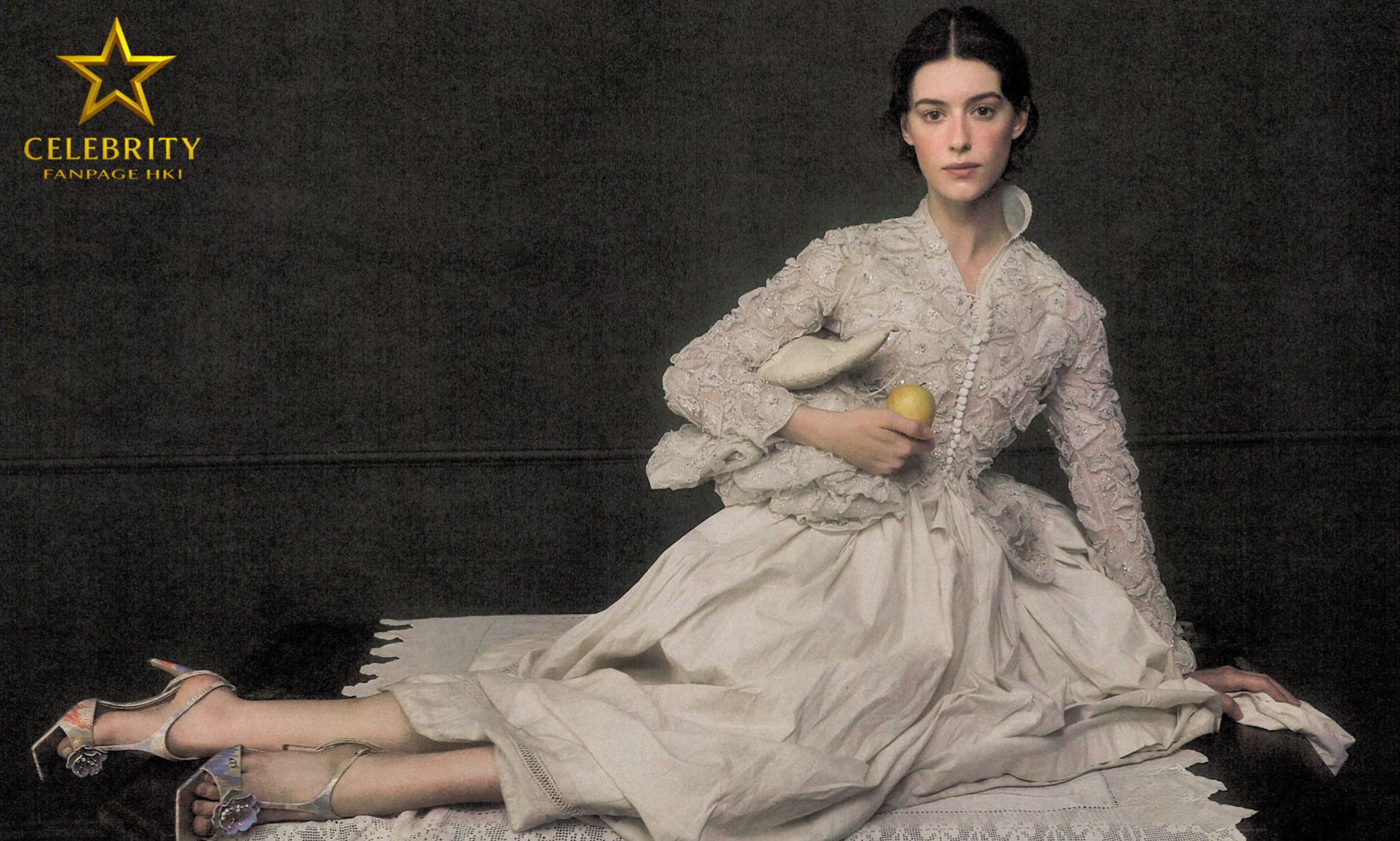
As Daisy Edgar-Jones takes flight in an earthy new spin on Sense and Sensibility, the London actor models a past-meets-present preview of the season’s new fashion and talks to Radhika Seth about love… on and off camera. Photographs by Szilveszter Makó. Styling by Tabitha Simmons

At the height of the Cannes Film Festival, under looming palm trees, a red carpet rolls up the long and storied staircase to the Grand Théâtre Lumière, once ascended by everyone from Grace Kelly to Diana, Princess of Wales. Today it’s the premiere of Fjord, Cristian Mungiu’s Norwegian drama that will, in the coming days, go on to win the Palme d’Or, and the film’s buzz has drawn a glittering coterie of stars, including Sharon Stone, Carla Bruni and Heidi Klum. But then, the protruding camera lenses swivel, and the volume rises, at the arrival of a certain 28-year-old Londoner.
When I catch sight of Daisy Edgar-Jones from the edge of the red carpet (I too am on my way into the film), she is wafting through the crowd in a floor-length, delicately sheer constellation of sequins courtesy of Balenciaga’s Pierpaolo Piccioli, draped in Boucheron diamonds (she’s an ambassador for the French jewellery house). She pauses in front of the heaving mass of photographers screaming her name and then, with a flash of her bare leg peeking out through a thigh-high slit, glances coquettishly over her shoulder as shutters click, her hair in an elegant updo with that enviable Jane Birkin fringe – referenced at hair appointments up and down the country – perfectly in place. But before I can catch her, she floats up those stairs and disappears into the throng.
Rewind several weeks and the scene is distinctly more lo-fi. The two of us are alone in a serene east London ceramic studio (like any self-respecting Gen Z’er, Edgar-Jones has found a passion for pottery), where she has suggested we spend a couple of hours hand-building clay cups. She bears all the quiet signifiers of a movie star in downtime: oval shades, vintage Levi’s, a burgundy suede Aesther Ekme bag, black square-toe ballet flats by The Row and an oatmeal-coloured knit from the same brand. She admits the origin of the latter with an apologetic grimace, assuring me that it’s her “special jumper for special occasions”, shows me a tiny hole in the sleeve (“I’m like, is that intentional?”) and takes it off before we dig into our balls of clay, revealing a frilly black Dôen crop top underneath.
This is the kind of environment where Edgar-Jones is most at ease. She might look a natural on the red carpet but she still finds it “overwhelming, for sure”. “Before I was an actor, I couldn’t even get my photo taken at school,” she says. “I found that really horrible. But I’ve got much more comfortable with that whole thing. Being at these events, with these amazing dresses, where you witness these wild things… I’m getting better at taking it all in and enjoying it.”
This is the calm before the press tour storm: come autumn, Edgar-Jones will tread thoughtfully onto the big screen in this generation’s key retelling of Jane Austen’s 1811 novel Sense and Sensibility, scripted by novelist Diana Reid and directed by indie breakout Georgia Oakley, who earned a Bafta nomination for her debut, Blue Jean. If director Ang Lee’s beloved 1995 version, starring Kate Winslet and Emma Thompson (who won an Oscar for its adapted screenplay), is all immaculate dialogue and polite bonnets, this is something looser, more earthy and elemental – gusts of wind swaying the tall grass, rain-soaked hair, cotton frocks ripped at the edges and stained with the juice of berries picked in the wild. Less Sunday night TV romp; more The Virgin Suicides-style yearning.
Edgar-Jones steps into the empire-waisted gown of the responsible Elinor Dashwood, the older sister to the emotionally turbulent Marianne (a wonderful Esmé Creed-Miles). Finding their circumstances greatly reduced after their father’s death, they retreat to a rustic cottage with their mother (Caitríona Balfe) and navigate a string of suitors, ranging from eligible to dastardly (a gamut that includes George MacKay, Frank Dillane and The Worst Person in the World’s Herbert Nordrum). Add Stacy Martin and Fiona Shaw to its supporting cast, an extraordinary array of English country houses sets, intricate, handsewn costumes, sweeping cinematography that dances alongside our heroines, framing every shot like a neoclassical painting, and you have all the ingredients for autumn’s most anticipated period piece.

Szilveszter Makó
It also marks Edgar-Jones’s most high-profile role to date, cementing her place in the pantheon of Austenian leading ladies, from Gwyneth Paltrow to Keira Knightley. After hearing of the project last year, meeting with Oakley and being offered the part, Daisy, naturally, leapt at the opportunity. “The 1995 version is one of my favourite movies of all time,” she says, sighing softly. “So it was fun to see how we could remake that classic for another generation. This feels modern and distinctive. There are moments that are rageful. Georgia really wanted to bring out the wildness of these girls. Elinor is more composed and contained than Marianne but she still feels things deeply. She just knows how to tame it.”
Creed-Miles’s casting was an added bit of kismet. She and Edgar-Jones met on the latter’s first film, the British comedy Pond Life, when she was 19 and Esmé just 17. Theirs is an almost familial connection visible in the careless ease with which Elinor and Marianne share beds, bicker and braid each other’s hair. “I have a deep love for her,” Edgar-Jones tells me. “When we read together for Sense and Sensibility, it was effortless. Our chemistry is the thing I’m most proud of in the film. This really feels like a love story between sisters.”
“Daisy is as kind, clever and talented as she was 10 years ago,” Creed-Miles writes to me over email. “Our arcs felt so rich and intentional as a result of how she approached scenes. Acting with her didn’t feel like acting, because she really is my sister.”
Elinor’s other official love is, of course, MacKay’s quietly dashing Edward Ferrars; it’s a will-they-won’t-they roller-coaster – high on longing, low on timely communication – which had “a real Connell and Marianne feel to it, because so much is unsaid”, says Edgar-Jones, citing her most dissected on-screen romance to date, 2020’s Normal People. It helped that “[George and I] work the same way, think the same way, are both very type A, meticulous,” says Edgar-Jones. The pair started corresponding with each other in character while on set and their letters are Daisy’s most treasured keepsakes from filming. (“I’ve also never seen anyone look so good in breeches and a floppy shirt,” she adds with a cheeky side eye.)

Szilveszter Makó
“Dais and I laughed a lot on set. A lot,” says MacKay. One memorable moment? “My badly timed trouser rip in a particularly emotional and romantic scene. It set a precedent for Edward’s trousers to genuinely rip in scenes that were emotionally intense.” Before filming together, the pair had met twice before “and each time I was struck by her”, continues MacKay. “She’s a wonder. Funny, smart, self-effacing, insightful and always giving. We went for a walk on Hampstead Heath to properly begin getting to know one and other, and from then on it just flowed. On set she’s an amazing leader. Quietly so, by example and enthusiasm. If it were football, she’d be the team captain playing in the heart of midfield: she leads by example, facilitating and inspiring every aspect of the game. She can pass, score, tackle, create space, hold space; she’s there for all.”
That exacting approach sometimes had its drawbacks. Shooting on film meant getting just two or three takes for each scene. “I don’t think I ever left a day of filming without wishing I’d done more,” Edgar-Jones says. She looks mildly panicked again at the memory. “It’s something I’ve had to learn to let go of, because I’m such a perfectionist.”
At one point, three months after filming wrapped, Daisy found herself spiralling about one particular sequence. “I rang Georgia and was like, ‘I think we need to go back and redo that scene.’ She was like, ‘What scene?’ There’s one I’d been overthinking. I had a dream about it. I thought, ‘I shouldn’t have done it that way.’ Georgia was like, ‘It’s fine. I’m in the edit. It’s good.’ I said, ‘Are you sure? Honestly, it’s not going to be hard to redo.’ And she had to say, ‘You’re good, you’re good.’ Maybe there were 12,000 other ways I could have done it, and perhaps I should have. But then, actually, when I watched the film, I didn’t even think about it. I was really happy. It’s funny, there’s something in me that wants to have put everything out there.”

I witnessed this first hand last September, when I visited her on set. After weeks in stormy Dartmoor, production had moved to the more tranquil West Wycombe Park, a grand 18th-century Palladian pile set amidst some hills in Buckinghamshire one can only describe as rolling. As swathes of feathered headdress-wearing extras took coffee breaks, strolling past swan-filled lakes and magnificent Doric temples, and into the stately home’s gilded, extravagantly frescoed ballrooms, there was Daisy, razor focused and dressed in a gown of pure silver. When the cameras rolled, her delivery changed subtly with each take, her movements always precise, her deep brown eyes radiating heartbreak. Once the scene ended, she allowed herself a small smile.
Back at the pottery studio, this scrupulousness is on full display. In our last hour and a half of hand-building, I’ve constructed a squat, misshapen cup with a comically large handle. (Daisy is wonderfully encouraging, telling me, “You could carry a candle in it – like a Scrooge moment!” Then she bursts into a delightful, gurgly laugh.) Meanwhile, she has made a perfectly symmetrical mug, decorated with daisies – what else? – though she’s having trouble with the handles. She wanted to replicate the scalloped arms of one of the looks she wore on the Vogue shoot the previous week. But, alas, the strings of clay prove too thin and she wraps her creation in plastic, determined to return to finish it another day. “I’ve been quite ambitious,” she says, shaking her head. “What was I thinking?”
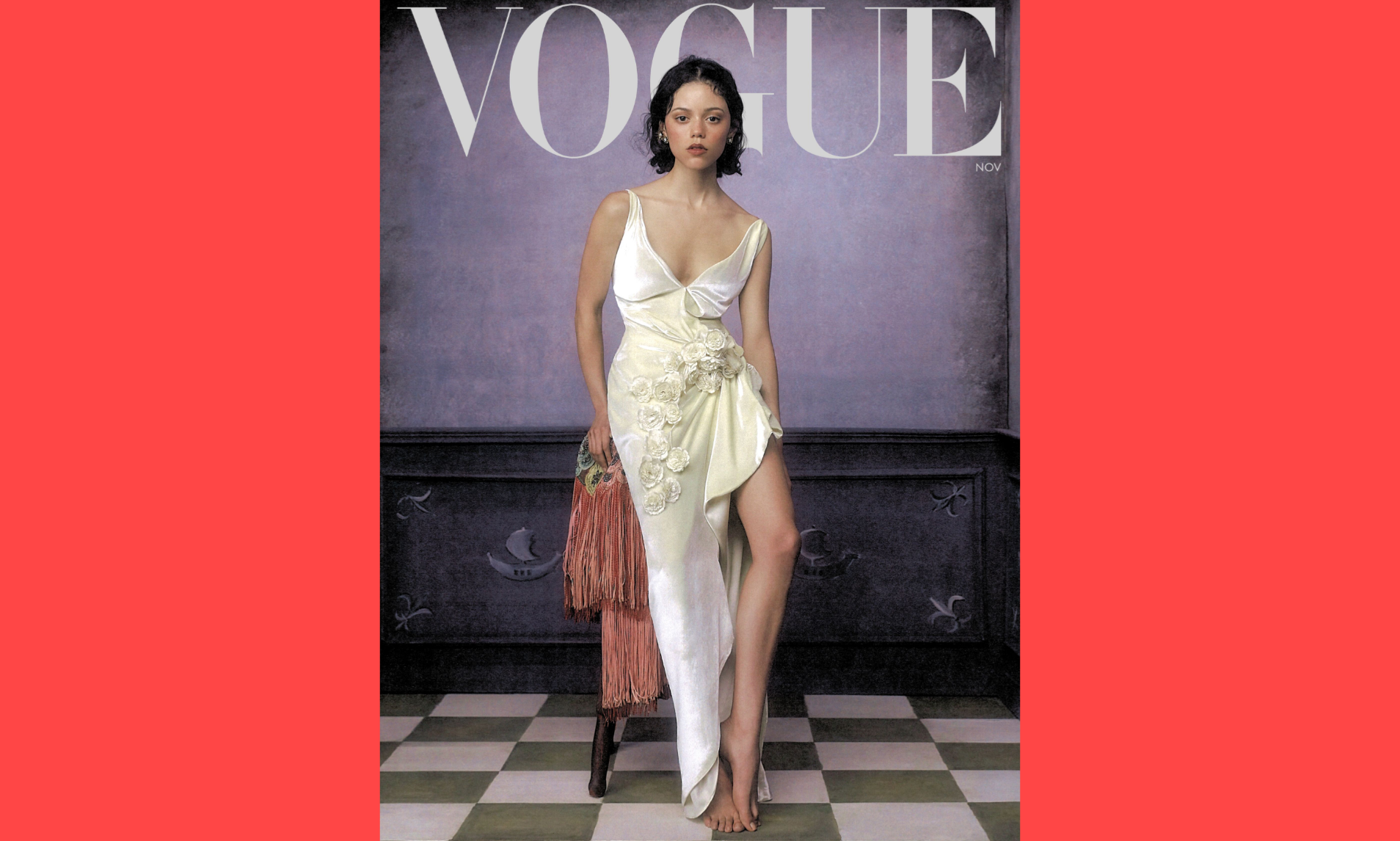
She describes her debut on the cover of this magazine as “a dream”, not only for the straight-off-the-runway and custom creations she slipped on, but because these key designer pieces of today were mingled with costume designer Grace Snell’s intricate work for the 19th-century setting of Sense and Sensibility. “It was all about blending the world of Sense and Sensibility with the runway collections,” says stylist Tabitha Simmons, who created a love letter to fashion that floats between historic periods. “So you see Daisy in Vuitton and George in the Prada coat but it all feels within the world of the film.” And beyond. The precisely staged, winkingly surreal tableaux roam through a clutch of epochs and influences. Daisy channels a Renaissance muse in jewel-toned Simone Rocha; she juxtaposes Elinor’s prim bonnet with silk Dior heels; she perches in feather-strewn Chanel with a paper-thin, embroidered mourning cap; reclines with a plush Givenchy bolero pulled over a corseted white cotton dress; and gazes into the lens in a billowing, hand-stitched skirt under puff-sleeved Rodarte and a sculptural porcelain vest from TheVxlley.

Szilveszter Makó

Szilveszter Makó
The same period-meets-modern spirit will infuse her carousel of outfits in the run-up to the film’s release. She swipes me through Pinterest boards on her phone, built with her stylist of two years, Dani Michelle, overflowing with lace, cinched bodices, contemporary takes on bonnets and plenty of vintage Chloé. It was Michelle (also the mastermind behind the infinitely shoppable cool-girl wardrobes of Kendall Jenner and Hailey Bieber) who confirmed Edgar-Jones’s ascension from prim ingenue to certified It girl with her knock-out Twisters press tour – a flurry of Chemena Kamali’s translucent, boho showstoppers, nipple-embellished Schiaparelli minidresses, corseted Vivienne Westwood and backless Gucci, offset with artfully windswept hair. “We have a hive mind at this point,” Daisy gushes. “When I work with Dani, I feel like a much more confident version of myself.”
“The thing I admire most about Daisy is that the person everyone sees publicly is exactly the person she is privately,” Michelle tells me. “She’s thoughtful, hilarious, endlessly curious and incredibly present.” When working together, “She and I both gasp over the same pieces in the same collections. What makes her so special is her ability to step into a designer’s world while still making every look feel effortlessly her own. I think that’s why people connect with her style so deeply.”

Szilveszter Makó
Edgar-Jones’s sense of style is one of the things her Twisters co-star Glen Powell recalls about meeting her. On their first day of rehearsals in Oklahoma, “Daisy comes in and she is just in this incredible, very chic outfit,” Powell tells me in a voice note. “I was like, “Wow, this girl’s got style. This girl is just dressed to the nines.” (For the most part though, the two of them were “in sweats together”.) “What makes Daisy kind of different is she’s also a fricking blast,” he continues. “Anybody who knows Daisy knows she’s a DJ. She puts together a huge mix – and I’m sure you guys have heard that she throws an epic party. She’s got a great sense of adventure and a great sense of getting the most out of this world, and just, life is a lot better with Daisy Edgar-Jones around.”
Despite her sunglasses, Edgar-Jones turns every head as we stroll to a nearby deli for brunch. In many ways, Elinor felt like a perfect fit, she continues once sat, swirling a spoon through a pot of rhubarb granola, “because I relate to her, and I love characters who navigate the world like I do. But I’ve also played a lot of introverted, soulful people. I’m very interested in playing someone big, arch and villainous as well. I would rather, as I’m getting older, take a really bold swing in the wrong direction than play it too safe.”
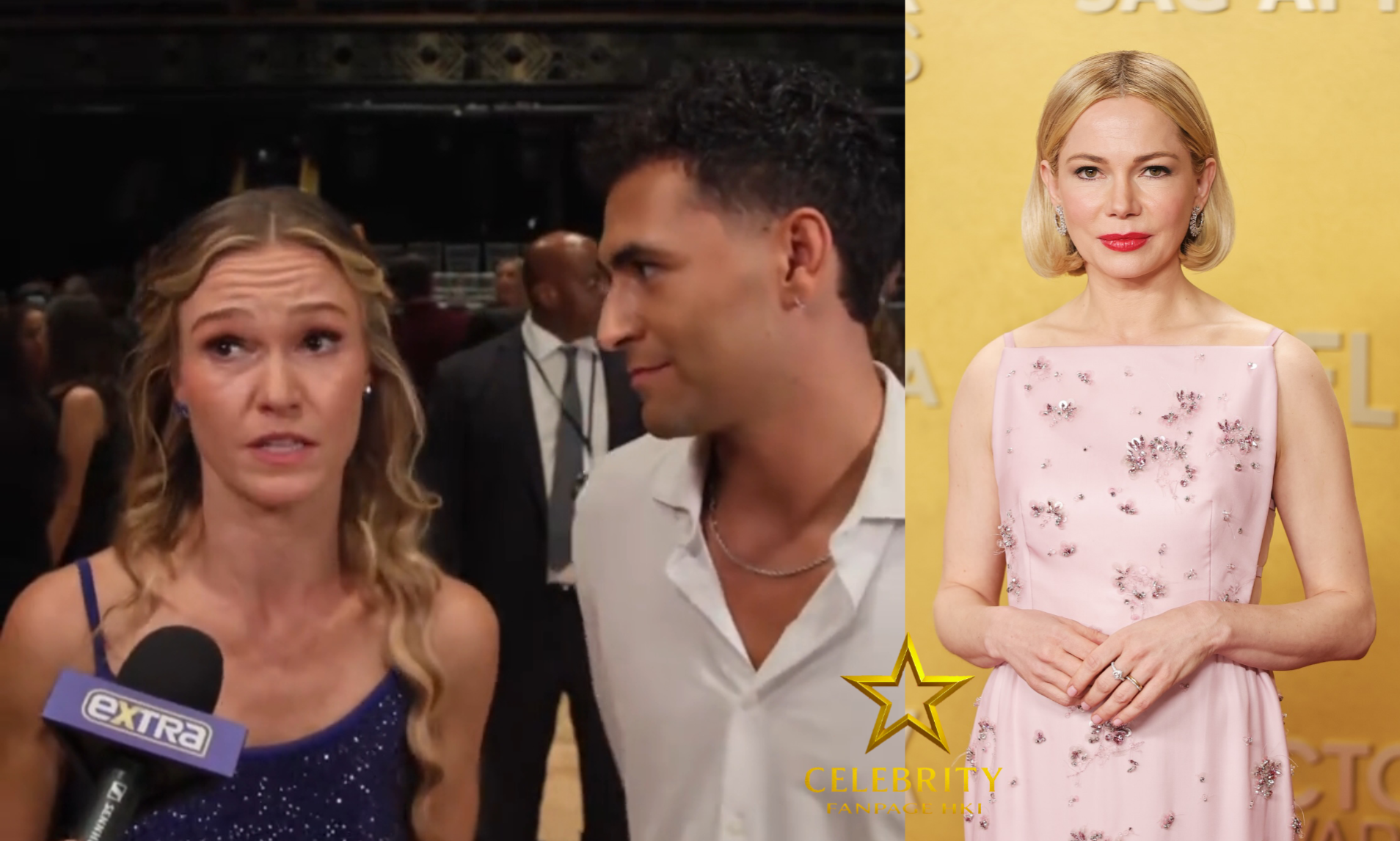
Enter A Place in Hell, the tense workplace thriller from Fair Play director Chloe Domont, set to hit screens this Christmas, which will see Edgar-Jones go head to head with Michelle Williams. Edgar-Jones plays a younger lawyer brought in to take the place of Williams’s more experienced criminal defence attorney as she goes on maternity leave. In the first trailer, which debuted at CinemaCon, Edgar-Jones snarls at the five-time Oscar nominee, “I’m not just going to replace you. I’m going to destroy your fucking life.” It’s certainly a pivot. “I got into acting because I like being naughty,” she explains. “Chloe was always like, ‘How much can we push this?’ This is a character who takes up space, is clear on her goals, has drive, is forceful, front-footed, takes the reins. It gets sick and outrageous. I loved it.”


Szilveszter Makó
There’s also an intriguing, absurdist Disney+ comedy series on the way titled Mosquito, from Poor Things writer Tony McNamara and co-starring Nicholas Hoult (“My earliest films and TV, they’re comedies! I’m not a serious person. I’m really not!”); Here Comes the Flood, a rip-roaring heist movie from City of God’s Fernando Meirelles, opposite Denzel Washington and Robert Pattinson (“I grew up a diehard Twilight fan but I couldn’t tell him”); and a big-screen adaptation of the bestselling novel about the video game industry Tomorrow, and Tomorrow, and Tomorrow from Coda’s Oscar-winning Siân Heder (Daisy’s been “playing a lot of Zelda” in the run-up). After that, she’d love to do “a massive world-building franchise movie, something dystopian or fantasy”, as well as “a classic musical” in the vein of Oliver! or Meet Me in St Louis.
Those are the kinds of films she grew up watching, in that relatively sleepy corner of London, Muswell Hill, as the only child of a former film editor mother and a father who was an executive producer on Big Brother and is now an executive director at Sky. She concedes to being “pretty middle of the road in a lot of ways” at school but came out of her shell during a class play, which told the story of Henry VIII and his wives via a Jerry Springer-esque talk show. Daisy was a sassy Anne Boleyn, raging about her beheading. “People were surprised,” she recalls. “I was quiet and polite, and then I became this character. I thought, ‘Oh, this is really fun…’”
Her mum encouraged her to audition for National Youth Theatre, expecting her to be rejected and for that to put an end to her teenage acting aspirations. Except, she got in, swiftly got an agent and then landed a part on ITV’s Mancunian sitcom Cold Feet aged 17. She stayed on the show for four years, revising for her A levels in her trailer, and deciding to skip university despite a number of offers. “I was auditioning and getting close to getting [other] stuff,” she says. “But then, there was a good year where I was like, ‘What have I done?’ There was so much rejection. I had to hold my nerve.”
At that time, she was also fighting a silent battle with endometriosis. “It started in my late teens. When I was 20, I remember my mum was like, ‘This is not normal, the amount of pain you’re in.’” She continued to work, “and sometimes, luckily, the adrenaline meant I could get through it”. An ultrasound at 24 led to a diagnosis. “It’s a chronic thing. I’ve been reading a lot about it and managing it, and it’s far less painful now than before. I have an anti-inflammatory diet, I don’t drink as much anymore. There is always a worry that it will come back. A big thing [with the condition] is struggling to have kids and I definitely don’t want it to get in the way of that.” She’s eager for more conversations around the issue. “It affects so many women and many don’t know they have it. Of course cramping is normal but to be doubled over in pain isn’t. You shouldn’t have to grin and bear it.”

Szilveszter Makó
In 2020, Normal People changed her life. When I ask how she feels about that particular roller-coaster now, six years on, there’s a sharp intake of breath. “Wow, that is so crazy.” She considers the question. “It was definitely a very strange experience,” she says finally. “I was only 21 when it came out. The public nature of it I found very scary.” She admits she still finds the paparazzi “quite unnerving”, and when she’s at festivals or clubbing gets “a little self-conscious about not being too loose”. But also, “I’ve just got better at not looking at that stuff.”
She’s still “really tight” with the Normal People cast – they go to gigs and usually do New Year’s Eve together – and most of her friends now live in her same patch of east London, just a cycle ride away from each other. But that’s not why she moved here last year. “I didn’t know this area well until I met my boyfriend, who lived in London Fields,” she tells me with a shy grin. “Then I fell in love with east London.”
That boyfriend is the Yorkshire-born photographer Ben Seed, known professionally as Pip (he has shot campaigns for the likes of Prada, Dior and Louis Vuitton). Their first meeting was refreshingly old school: a blind date set up by a make-up artist who had worked with them both. They’ve been together three years (“It’ll be four this year,” she says, smiling). “With that amount of time, I feel like you get to see each other through so much,” she says. “He’s so supportive and really champions me in a way that is so magic. I feel very safe and happy.”
It can be tricky to coordinate schedules but “we try not to go longer than three weeks without seeing each other if possible. We’re intensely together and then intensely apart but somehow it works. It can be hard when I’m so far away, it can be really tough, but thank goodness for FaceTime. We find ways to make it work.” Once reunited, their tastes run to those of many in their late-20s: hanging with friends at the pub, going to the cinema.


Szilveszter Makó
Edgar-Jones co-produced Seed’s first short film in 2024. Would they work together on bigger projects? “Definitely. We had fun recently when he got hired to shoot me for a magazine and they didn’t know that we were together. I was like, ‘Should we tell them?’ I love shooting with him. I know him so well, so I can really relax and be creative. Sometimes he’ll be like, ‘Do you fancy shooting this thing?’ And we’ll just go and do something in the studio together that feels really artistic. He loves film and he’s so great to talk to about it, and so passionate, but also he sees it from a different angle. I would love to be directed by him. He’s so talented.”
A lot of her mates are loved up too. “Everybody’s getting married now,” she tells me, her excitement palpable. “I’ve got three weddings this year and two more next year. I love love and I love weddings.” Seeing one of her best friends, Cold Feet co-star Ella Hunt, tie the knot recently made her head spin. “She was with me at the beginning and now, seeing her in the dress…” She faux hyperventilates. “I was like, ‘Oh my God, we’re grown-ups! We’re getting married! It’s all starting!’ It’s kind of wild.”
As for her tenets on wedding guest dressing, “At my own wedding, I wouldn’t mind if everyone was going full sexy. That’s fun. But for someone else’s, I wouldn’t, because, like, it’s an odd way to meet their nan.” She’s currently planning her looks, and eyeing up a floaty, pink lace Chloé dress that she’d stowed away for a special occasion.
Suddenly it’s lunchtime and Edgar-Jones has to head home to pack before flying to New York for the Met Gala. There she’ll twirl under bright lights in bejewelled, fringe-lined McQueen. Yet another Cinderella moment, with so many more to come.
Before she leaves, she tells me that she keeps a diary and sets a theme for each year. For 2026, it’s “to seek joy in all that you do”. This film, this exuberant phase of her life – it all fits the bill.
Via: Vogue





Publicar comentário