Danny Glover Opens Up About Living with Alzheimer’s Disease at 79: ‘I Want to Say, Your Life Continues’
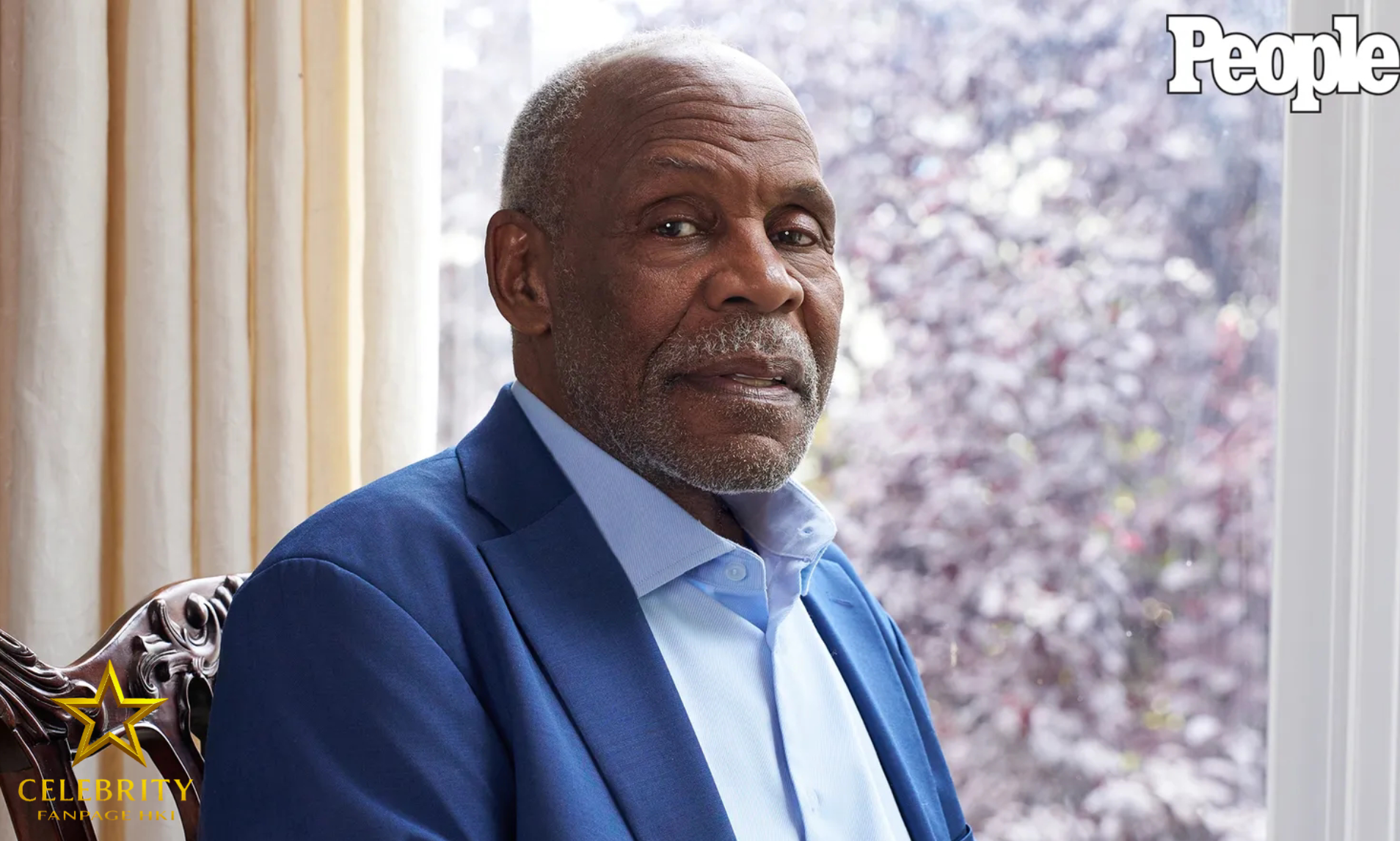
Danny Glover and his support network share intimate details about his journey with Alzheimer’s in this week’s issue of PEOPLE
:max_bytes(150000):strip_icc():focal(999x0:1001x2):format(webp)/PEOPLE-Danny-Glover-01-T-9ab6fcc1fe164b96b1f0a07d85b44ead.jpg)
Credit : John Russo
“It’s like a big party was here,” says Danny Glover, gazing around his dining room at the family, caregivers and PEOPLE crew around him and breaking into his famous broad smile.
In the 50 years he’s lived in this historic San Francisco townhouse, there’s been no shortage of celebrations. Fellow Hollywood stars and icons like Harry Belafonte have visited his home’s narrow halls, filled with striking works by Black artists, as he proudly held court.
But today’s intention is different. Sitting down for PEOPLE’s interview, the beloved veteran actor, who will turn 80 on July 22, is just trying to get his bearings. “I think he’s aware sometimes and then sometimes not,” says his daughter Mandisa, 50. Her words prove true throughout his interview, during which Glover opens up for the first time about his life with Alzheimer’s disease, often toggling between unfinished thoughts and poetic personal tangents.
:max_bytes(150000):strip_icc():focal(799x0:801x2):format(webp)/PEOPLE-Danny-Glover-05-c70ea3d0418a4a888746fee4759d8802.jpg)
Credit: John Russo
But there are also times when he speaks lucidly. “I’m still not accepting in my mind all parts of it,” he says of his diagnosis. “There are the moments that you keep remembering that validate the fact that you can remember stuff. And there are moments I’ll never forget.”
To the world, he’s surely had an unforgettable journey. After acclaimed performances on Broadway and in breakout films like 1984’s Places in the Heart and 1985’s cultural touchstone The Color Purple, Glover won millions of fans over with his turn opposite Mel Gibson in the 1987 action blockbuster Lethal Weapon. The movie launched a hit franchise, sent his career to new heights and helped usher in an era of broader opportunities for Black actors. With family-friendly films like 1994’s Angels in the Outfield and gripping dramas like 1998’s Beloved, Glover became renowned for his versatility and power onscreen. And in 2022 he took home the Oscars‘ Jean Hersholt Humanitarian Award for his lifelong dedication to charitable work and activism.
That year, Mandisa, his only child (with first wife Asake Bomani), says she started to notice a difference in his behavior. “The history of my dad is that he remembers every single thing back to 1970, what corner he was standing on, who he spoke to, what they spoke about, what color they were wearing, everything,” she says. But that changed. “He’d tell you so much about his parents — and I’ve heard those stories over and over — and there would be pieces of the story missing. I said, ‘I wonder what’s going on.’”
Reconciling himself with the diagnosis he received in 2023 is “in some sense acknowledging that it’s happening to you and at the same time that there are millions of people suffering from it,” says Glover. The actor and his family, including his younger brother Marty, 67, who lives with him, came to terms with it together.
:max_bytes(150000):strip_icc():focal(799x0:801x2):format(webp)/PEOPLE-Danny-Glover-06-abf3872a15ce485aa51d291ecf5f34ed.jpg)
Credit: John Russo
Now, Mandisa says, her dad is ready to reveal his diagnosis and share what it’s like to face the disease. It’s important to him to be of service. “I don’t feel like it’s the end of my life,” he says. “There’s work to do.”
Never miss a story — sign up for PEOPLE’s free daily newsletter to stay up-to-date on the best of what PEOPLE has to offer, from celebrity news to compelling human interest stories.
Life for Glover began in San Francisco — a beloved hometown he showcased in one of his last major films, 2019’s The Last Black Man in San Francisco — where he was the oldest of five kids raised by postal workers James and Carrie. “There’s a picture in my living room with my mother and father,” he says. “I have it to remind me, looking at it, how much I loved them both.” An avid reader thanks to his days working a paper route as a kid, he attended San Francisco State University, where he was drawn to both acting and activism.
At age 30, when he was working in community development, he decided to follow his passion, taking acting classes at the Black Actors’ Workshop of the American Conservatory Theater. One successful show led to another, and soon Hollywood came calling.
:max_bytes(150000):strip_icc():focal(599x0:601x2):format(webp)/last-black-man-in-SF-85e7d7340caf47efaba1aaf760d2e42a.jpg)
Credit: David Moir/A24
These days, that period brings up memories of his mother, who was killed in a car accident the same day Glover found out he’d won a career-changing role in Places in the Heart. “Guess what my mother wanted to be? An actress,” he says.
He goes on to tell, then retell, the story of when she first realized his talent after a theater performance. “She says, ‘Son, the people said you can act,’” he recalls with a chuckle. “My girl, man. We argued like girlfriend and boyfriend.”
His daughter knows this tale well — and his fondness for verbal sparring. “We argue a lot,” she says. “I mean, I’m the representative of his mother. I’ve taken on that role. He needs to argue with somebody, and it’s got to be me. But it’s all love.”
:max_bytes(150000):strip_icc():focal(999x0:1001x2):format(webp)/lethal-weapon-15fdfde2df794323a9129b494242c191.jpg)
Credit: Everett
When it comes to the height of his career, Glover’s power of recollection is uneven. Working with Gibson on Lethal Weapon “was great,” he says. He talks about the leverage it took for Oprah Winfrey to get their artistic drama Beloved made: “She had the power.” With his films, “I’ve had the opportunity to talk about how I see the world and what relationship I played in the world. I began acting because I was a citizen. Acting is what gave me a voice.”
His life as an activist draws out some of his sharpest memories. “I remember when [Nelson] Mandela got out of prison, and we were walking,” he recalls of the late South African anti-apartheid leader and president, whom he supported and played in a 1987 TV movie. “[Mandela’s wife] Winnie came up, and Mandela said, ‘Winnie, there’s your other husband.’ It was funny.”
Longtime friends like actor Delroy Lindo appear in his memories too. Lindo says they share a lifelong “kinship” that began “from virtually my initial introduction to him. I think this is true basically due to Danny’s ability to genuinely connect in very authentic ways with the vast majority of people he meets.”
:max_bytes(150000):strip_icc():focal(799x0:801x2):format(webp)/PEOPLE-Danny-Glover-04-81b94368cbe347198df6188615d0b7f9.jpg)
Credit: John Russo
Glover seems particularly reflective about one role. Asked about his portrayal of Mister, the abusive husband of Whoopi Goldberg‘s character in The Color Purple, Glover notes, “He was in his own pain too as well. Part of the outcome of that was his own healing. In those kind of relationships, people have an opportunity to resolve their own internal contradiction.”
To Glover’s brother Marty, it’s the role that was farthest from reality. “Everybody thinks he’s Mister,” Marty says of fans equating Glover to the complicated villain. But “he’s the greatest guy I ever met in my life. He saved me. I’ve been to jails, institutions, used drugs. Growing up, we weren’t close until I started getting into trouble. And then he came and got me out and moved me down to Hollywood, and we’ve been inseparable ever since.”
Working in production on films, Marty got to see his brother’s genius up close. It’s made the dementia brought on by Alzheimer’s even more heartbreaking. “You see the deterioration, and you think, ‘Wow,’ ” he says. “Sometimes you get emotional about it. It’s tough, because you don’t want to see nobody go through this.”
:max_bytes(150000):strip_icc():focal(999x0:1001x2):format(webp)/outfield-541eafd72cb246a285ce1234776438ce.jpg)
Credit: Snap/Shutterstock
The supportive network around Glover remains strong, with Marty, Mandisa and a team of caregivers all helping. Glover’s mind is at its clearest in the morning. “When I wake up, I try to figure out something,” he says. “Reading something, looking at something. Democracy Now! is a show that I love.”
Mandisa says she’s “sure it’s depressing” for her father. “It’s a change in the core of who you think you are or don’t think you are.” And for her “it’s very hard. You just have to live the day for what it is.” Glover and his family plan to continue working with his doctor to explore treatment options. “We just want him to live his best life,” says Marty, “like he made us live ours.”
If you ask Glover, the party’s still going: “I still have my daughter, I have friends. I want to just say, your life continues.”
Via: People









Publicar comentário