Anna Faris Opens Up About ‘Scary Movie’ and Overcoming Anxiety: ‘I Was Convinced That I Was Going to Be Framed for Murder’
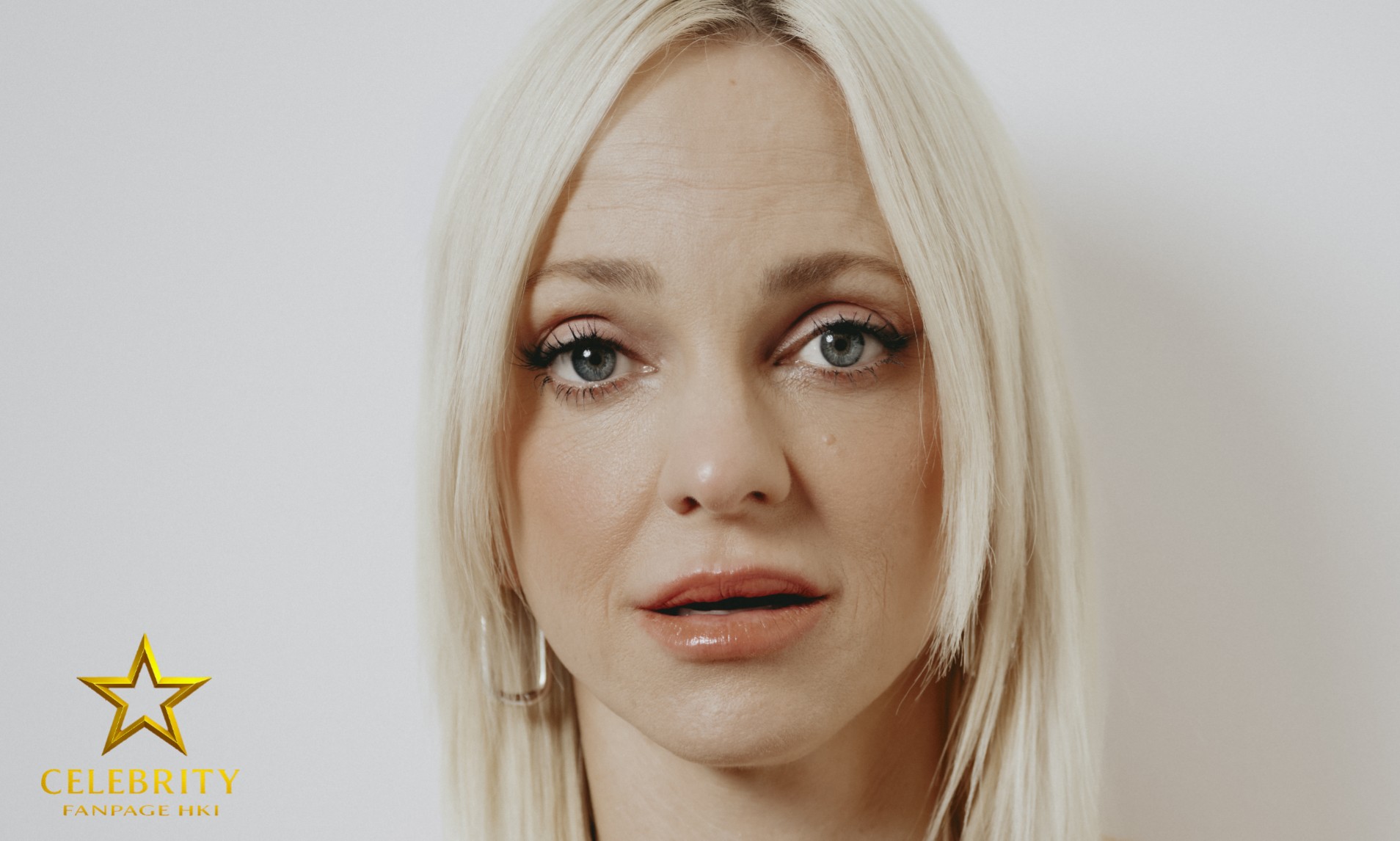
The “Scary Movie” star talks about how little she was paid on the spoof franchise, overcoming a public divorce and feeling cast out by Hollywood.

“I’ve been waiting for this moment,” says Anna Faris.
The celebrated actress and comedian is on top of the box office once more, as “Scary Movie,” the sixth installment in the popular horror-spoof series, opened to a franchise-best $55 million last weekend. It all came to fruition thanks to Marlon Wayans, whose family was callously kicked off the films by Harvey and Bob Weinstein after the second installment.
One of the first things Wayans did when he got back the keys to “Scary Movie” was recruit stars Anna Faris and Regina Hall to return as Cindy Campbell and Brenda Meeks, its two embattled protagonists who’ve once again found themselves in the crosshairs of Ghostface, a psycho killer who really has it out for them.
“Scary Movie” was a blessing for Faris, who’d experienced a number of personal and professional hardships, from a public divorce to a career slowdown after exiting her CBS sitcom “Mom” in 2020 during COVID. But now, she’s never been in more demand. After “Scary Movie,” she’ll star in three more films out this year, including the screwball comedy “Spa Weekend” and the dark drama “Primetime,” opposite Robert Pattinson.
In a candid conversation via Zoom from her cabin in the woods of Washington, Faris opened up about her highs and lows, and how the success of “Scary Movie” seems like “one big victory lap.”
I see you’re in a lovely-looking cabin.
I grew up north of Seattle, so me and my husband bought a house in Washington in 2019. It’s majestic here.
Like “Twilight.”
[Laughs] Totally, it is. But now I’m old enough to handle the depression!
As someone who grew up watching your films, it’s so fun seeing you onscreen again in “Scary Movie.” The first film was way back in 2000 and really launched your career.
I’m so happy I get to tell my story. The whole thing has been a reconciliation and a victory within myself. I know I’m Seattle cynical, but I guess L.A. infiltrated because I keep using the word “journey.” In 1999, I was graduating from the University of Washington with an English degree, I was going to go into marketing, but I wanted to be a novelist. Through a series of circumstances, I got an audition tape in front of Keenan Ivory Wayans. It all happened so fast, and was less of a dream of mine being realized and more of a dream being formed. I felt like someone blindfolded me, put me in a helicopter and dropped me in a strange land.

Getty Images
That sounds surreal.
I mean, I was a short kid growing up. That was my identity: “The short girl, and we think she’s a girl, but she could be a very tiny boy.” For me, it was as though suddenly everyone was telling me I was tall, especially with my relationship to comedy. I’d never identified as funny. So, Keenen giving me that gift of casting me was a 180 in my life. Then, the years after that, I felt frustrated at times with the headiness of the industry. Sudden fame was a heady experience, and I found myself getting swept up in ego and competition at times — things I didn’t like to recognize in myself. One time, I remember Keenen saw me and must have conveyed envy toward Shannon Elizabeth getting to look so beautiful and sexy, and I just fundamentally did not feel that I should be watched, as a person. I was a “back of the class” kinda kid. And Keenen told me, “There’s no vanity in comedy.”
You came up in that weird Maxim/FHM era. It seems pretty antiquated now that up-and-coming actresses had to undress for these men’s magazines as a rite of passage.
Yes! It was weird. I think at one point I was, like, No. 73 on Maxim’s Hot 100. It was weird as a quiet, average kid who liked the Dewey Decimal System. I also did not come from a family that took a lot of pictures, and suddenly, I had to have fun with it and look directly into the camera. Those were ideas that I did not understand, and I didn’t enjoy it. Everything was so new. I was used to rejection in my experience in Seattle. I had acted, and I loved it, but I did not think I could make a living off of it. And I was really naïve to the idea of the lack of imagination Hollywood had in terms of the categorization of comedy and drama. I never recognized the difference because I’d done mostly dramatic work and the preparation for it was the same, fundamentally. It felt really frustrating. Journalists would ask me, “Are you afraid of being typecast?” and I’d go, “Well, yeah.” I thought I was quickly losing options. I wanted to act and couldn’t believe I was able to support myself from it, but not as opulently as people would assume.
How so?
Well, I was not invited back for “Scary Movie 5.” And I think it was because of age and money. I don’t think I ever got a male-comparative paycheck — I know I didn’t, nor did Regina. We didn’t make money that you can hide away.
Which is wild because you’re the star of this huge, blockbuster franchise.
That was also part of my relationship to the “Scary Movie” franchise. I grew up with a deep sense of injustice being a short kid in a tall family, so there was a compounding. It was always gratifying to seee people come up to me and go, “Yo, that jacket is tight!” But because I felt the love around the world from different people, but not in Hollywood, I felt undervalued.

Paramount Pictures
And the Wayanses were kicked off the franchise after “Scary Movie 2.”
So, in 2002, that was the last time I’d talked to Keenen. He had called me and said that the franchise had been taken away from them, and he asked me to not do it. It was such a devastating moment in the sense that I admired Keenen so much, and he was asking me to do something, but I was under contract. He said, “All they can do is sue you!” and I’m thinking, “I’m living in a one-bedroom apartment by the farmer’s market!”
You were living in a one-bedroom apartment after two “Scary Movie” films? Was that Weinstein accounting? Were you not compensated much for those?
Uh-huh. When I got the role for “Scary Movie,” I got a three-picture deal. My new manager celebrated it, but I didn’t know what it meant. What it means is that they can lock you into a movie franchise and not pay you much. I got paid 65,000 Canadian dollars for the first movie, which quickly dissipated after taxes and manager’s fees. And then I wasn’t paid much for the second one or the third one. So, my feelings about the franchise were tough, and I felt so arrogant if I ever dismissed my massive stroke of luck in getting the role of Cindy Campbell. That made me feel grotesque, as though I’d been poisoned by the fame; but at the same time, I felt, fuck, if I’m good enough to compete, let me run with the champs! You know?
And now you’re back in “Scary Movie.”
It’s been a victorious feeling, the last year and a half since Marlon called in 2025. But my feeling at the time was that I was slowly fading out [of the industry]. Because I didn’t come to Hollywood with stars in my eyes, I just didn’t know what any of it meant, and I didn’t feel funny or confident in being funny at all.
It’s interesting to me that you didn’t think you were funny because I did some research on you for this interview, and when I read about you making home videos in your bedroom as a child with your talking retainer, that sounds very funny to me.
It was named “Simon.” And Simon was British. I loved talk shows growing up, like “Sally Jessy Raphael.” My mom didn’t let me watch a lot of television, so I had a radio and listened to a lot of Dr. Joyce Brothers and loved talk radio. I didn’t have a lot of friends, but I didn’t really need them. I liked being alone. We had woods in our backyard, and I was always out in the woods. I still think being a forest ranger would be a great profession for me. I enjoy solitude. But I was a very imaginative kid. I read a lot. And I never showed [the videos] to anybody, and it was only later how funny I realized it was.
I did do odd things sometimes, like I did wear a Christmas tree skirt to school for a while. It felt like an offensive-defense, like starting to bleach my hair. I was very uncomfortable with being a sexual person by any means. I was a late bloomer. “The House Bunny” actually changed my ways, quite frankly! But that’s a longer discussion. I was an offbeat kid with a deep sense of injustice. I was convinced that I was going to be framed for murder.
Via: Variety



Publicar comentário